
It was a crisp November morning in northwest Georgia. Our small band of explorers assembled eagerly at the unassuming entrance of Pettyjohn's Cave. If you didn't know it was there, you could walk right past. Finally, we were all geared up and ready to enter.
I squeezed in first, sliding between a few boulders and down to the left. The narrow gap quickly opened into a massive chamber, and I could feel the thick air getting noticeably warmer. As the rest of our party squeezed in behind me and switched on their headlamps, minerals on the damp walls and ceiling sparkled in the beams of light.

We've been in Pettyjohn’s Cave several times now, but it’s always a thrilling experience. This time our party consisted of my family (wife and kids) and my friend David along with two of his kids. We'd returned to reach a specific chamber that eluded us on our last adventure thanks to a navigation error. Our goal was to hide a time capsule for others to find.
Taking kids caving may sound like a bad idea, but we've found it can be an exciting adventure that can be done reasonably safely with proper prep. That's what this post is about. Whether you want to attempt Pettyjohn or some other wild cave, here are some tips to get you started spelunking with your kids.
Before you head underground, you need to find a cave that's suitable for families. This takes a bit of research, and may require a drive. Check out map.mightythings.org to see if anyone in our community has added a cave near you.
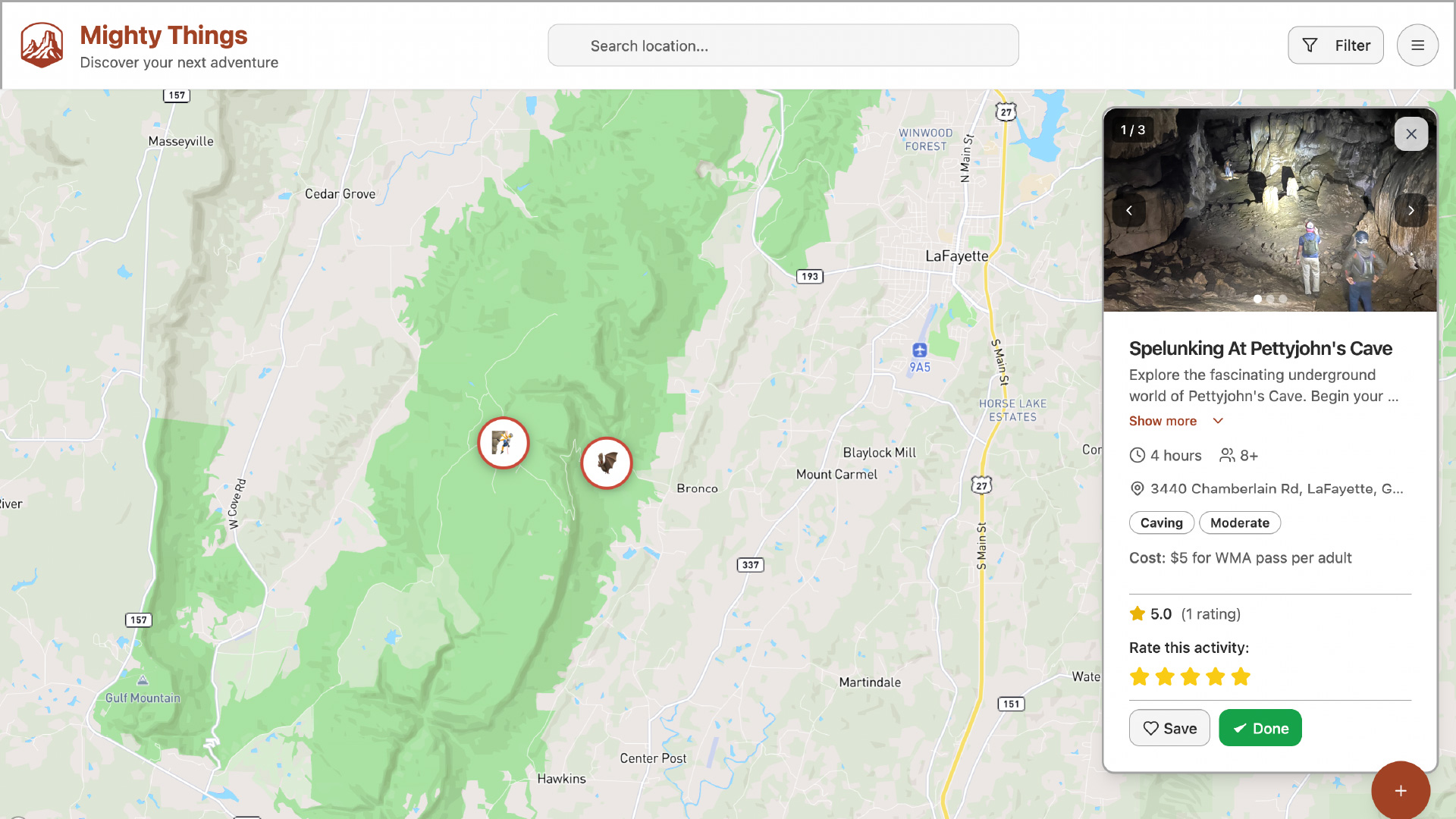
If not, try searching Google or your favorite AI app for "wild caves near me". Just make sure you find something that’s accessible without technical climbing gear and has a reputation for being safe. You also want something with at least one large chamber where kids can move around comfortably. Tight squeezes are part of the adventure, but having some open space helps when kids need a break.
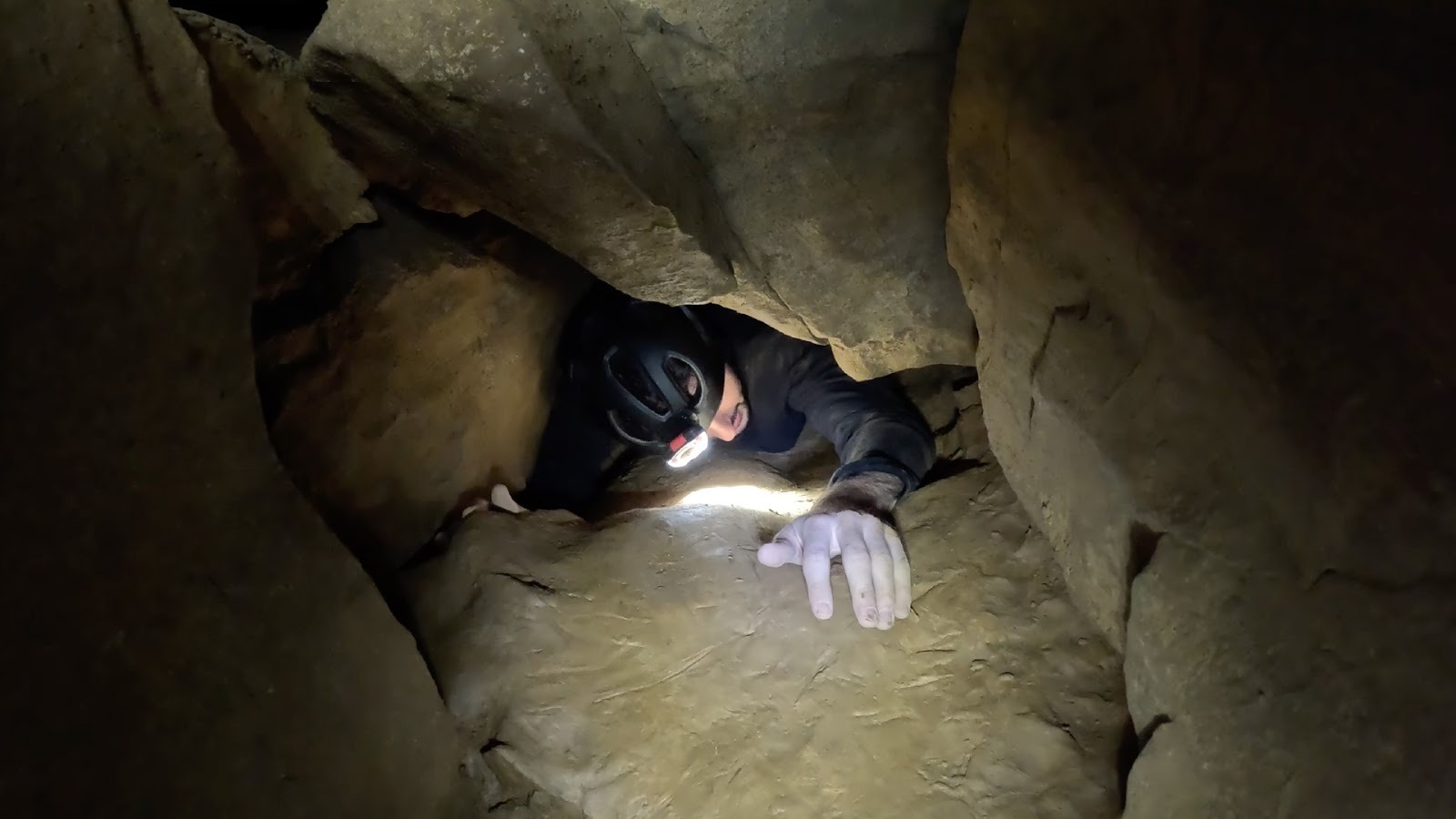
The idea of going deep underground can be intimidating, so if you aren’t quite ready for a wild cave, there are commercialized caves out there where a company takes you down. Some even have lighting and paved walkways. This can be a good way to get introduced to the idea, but frankly there is just something epic about DIY caving.
Check local regulations. Some caves require permits, and some are closed during certain seasons. Respect these rules. Also, some caves are on private property, so you may need permission from landowners. Pettyjohn’s Cave is in the Crockford-Pigeon Mountain Wildlife Management Area (owned by the state of Georgia). It’s open to the public, but you’ll need to get a $5 permit.
Bringing the right gear will make the experience safer and more enjoyable for everyone. When you're an hour from the surface, it's important to make sure everyone has extra lights and batteries and can handle emergencies that pop up. In our experience a kid getting hungry is almost as bad as a light dying. Here's what we packed:
Helmets and headlamps: We used bike helmets and ZipTied the lights into place. This will save your head in tight spaces or slips and keeps your hands free for climbing.
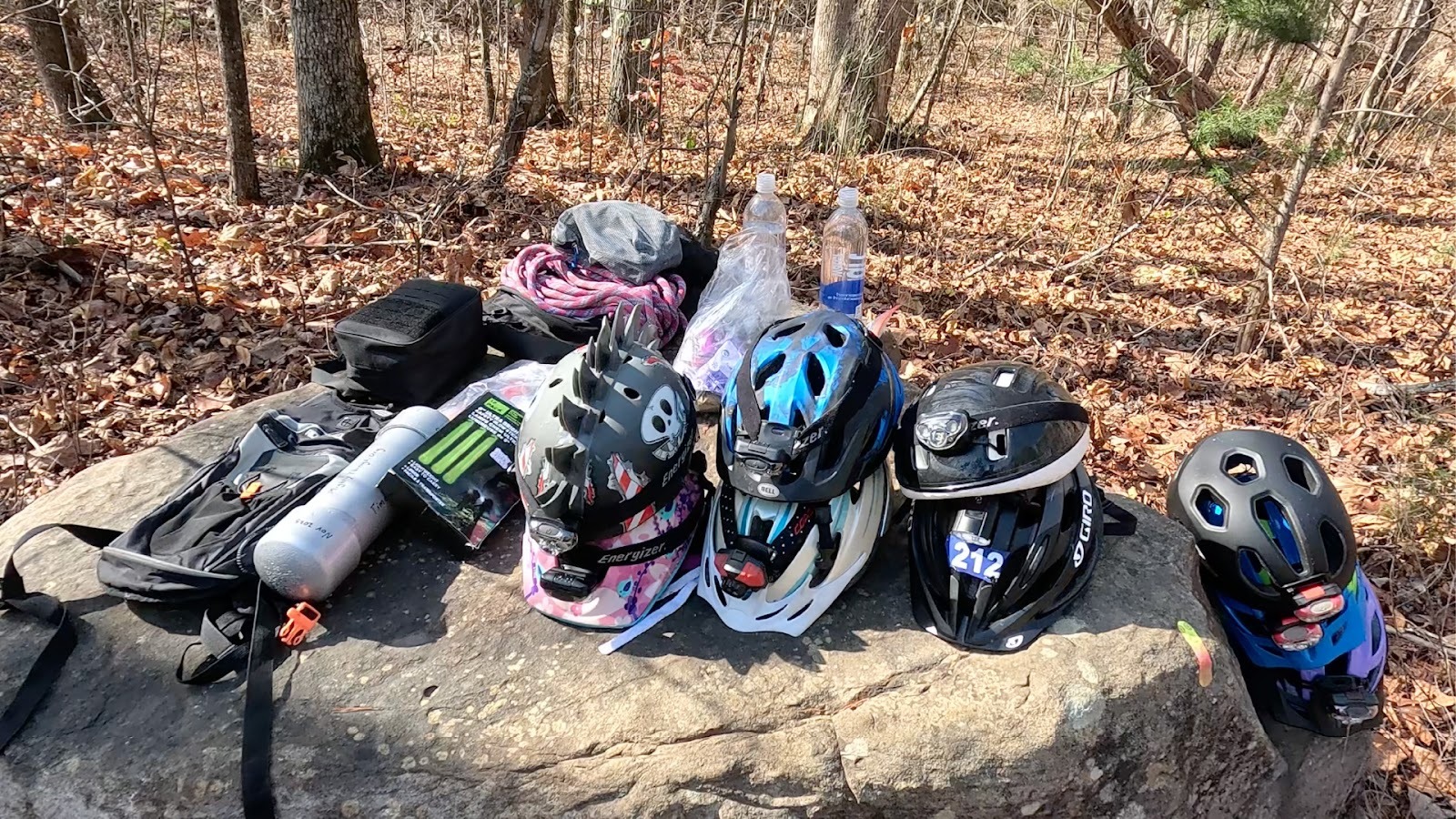
First aid kit: Hope you don't need it, but bring one. Scrapes and cuts happen. A few splints can be a good idea too.
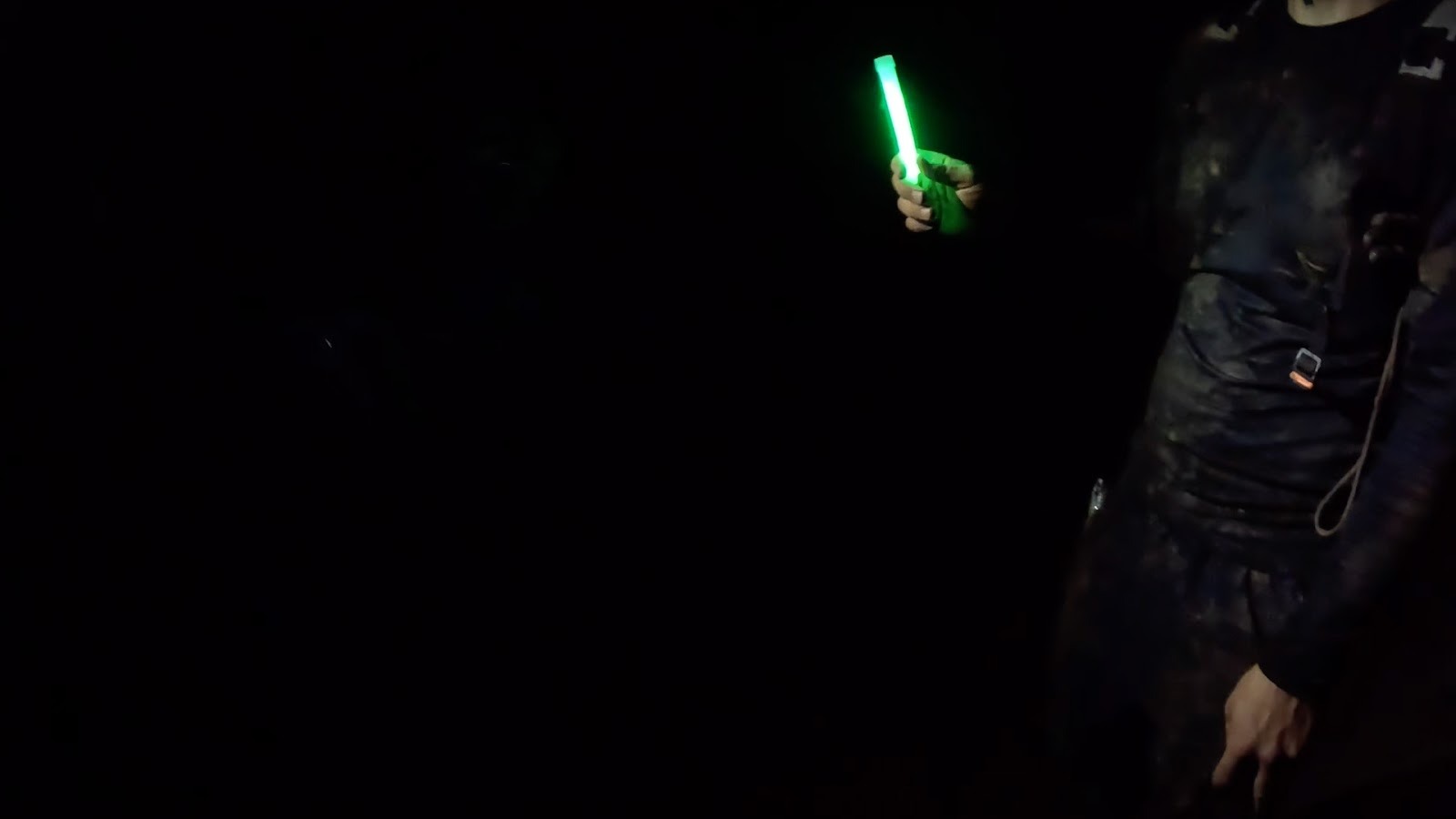
Backup lights and glowsticks: It would really suck to lose light. Make sure everyone has a backup. Glowsticks are great because they don't require batteries and can last 12+ hours.
Food and water: Bring more than you think you'll need. Climbing around in a cave burns energy, and having snacks can turn around a kid's attitude fast. Make sure to bring a package of candy to reward kids for reaching certain milestones.
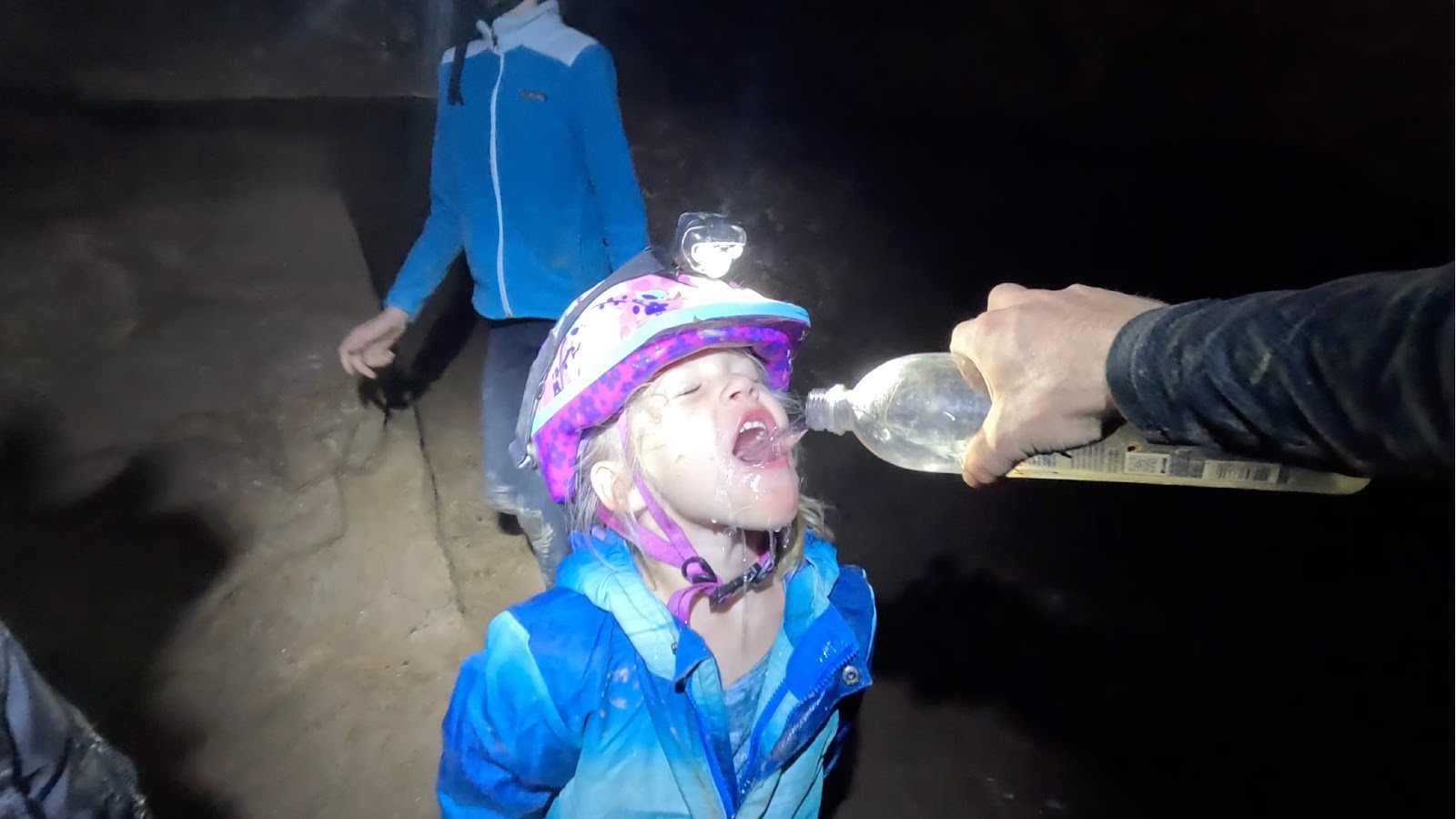
Kneepads: Optional but recommended if you're planning to do any serious crawling. Your knees will thank you.
Rope and harness: Only necessary if you're attempting more technical sections. For most family-friendly caves like Pettyjohn's, you won't need this.
Whistle: Optional but good idea in case you get separated.
Extra clothes / towels in the car: You will get muddy. Having clean, dry clothes waiting is a game changer.
The initial thrill of being in a cave will keep kids engaged for a while, but climbing around can be hard work, so here are some ideas for when the going gets tough:
Kids may be nervous at first. Consider keeping your first visit very brief and structured to get them used to the idea. Once they know they can do it, their confidence and adventurousness will grow.
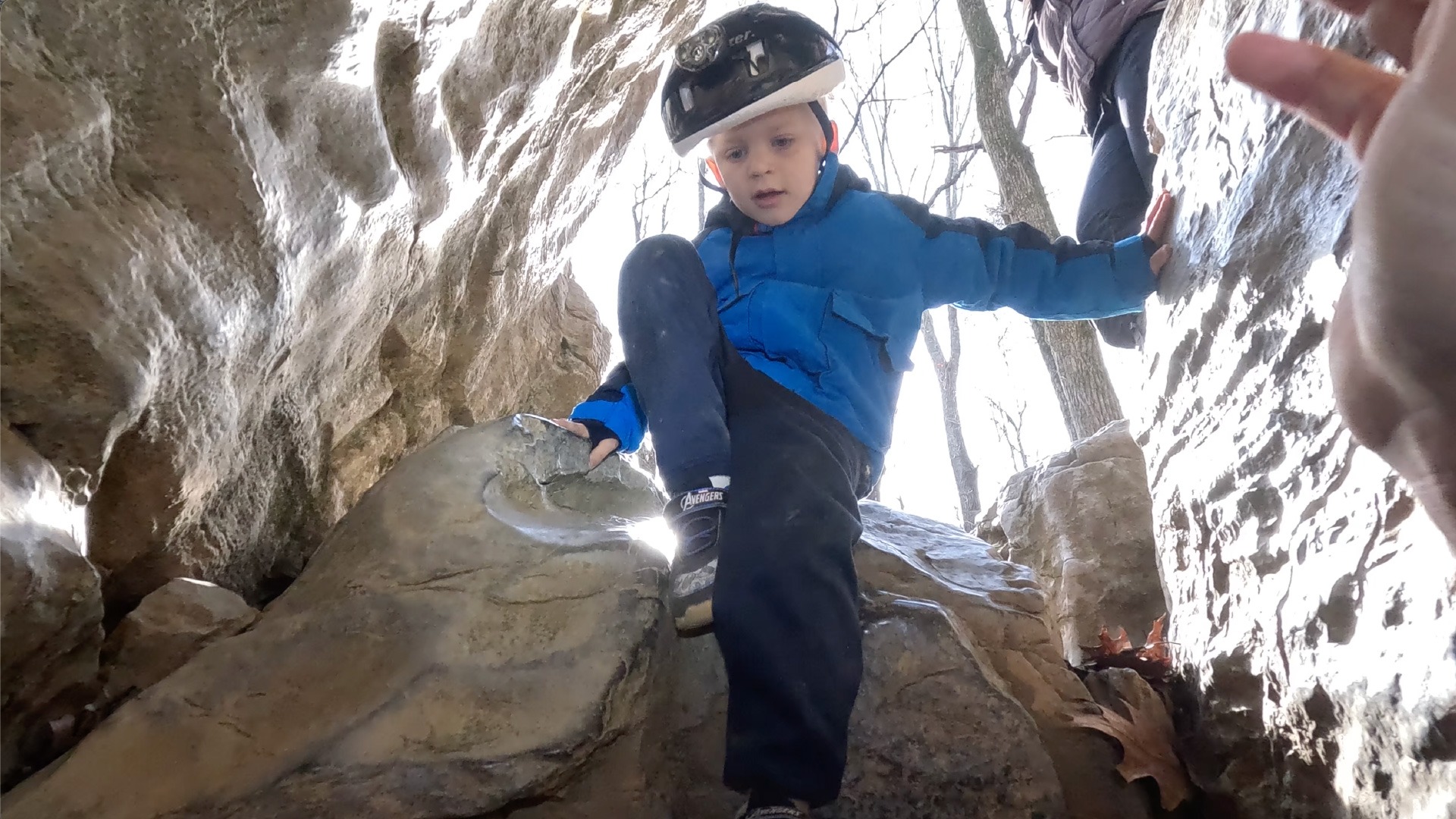
Set realistic goals. Don't plan to explore the entire cave system on your first trip. Pick a reasonable objective, accomplish it, and head back. You can always return. It's easier to keep morale up when kids know the endpoint and you stick with it.
Take it slow. There's no rush. Let kids explore at their own pace. If someone wants to stop and look at a formation or test the echo in a chamber, let them. That's part of the experience. The flip side is that everything will take longer than you think.
Expect to get muddy. Seriously, embrace it. If you're worried about staying clean, you're in the wrong activity. The mud is half the fun.

Gamify your adventure. Conduct experiments like measuring air temperature. Have everyone turn their lights out for a moment to experience total darkness (kids find this both terrifying and awesome). Try navigating with just a glowstick. Take time to observe different cave features.
Pettyjohn's Cave is located in Northeast Georgia at the base of Pigeon Mountain. It's one of the more accessible wild caves in the area, which makes it a solid choice for families looking to try spelunking. But the cave offers over 6 miles of underground passages, so even pros find plenty to explore.
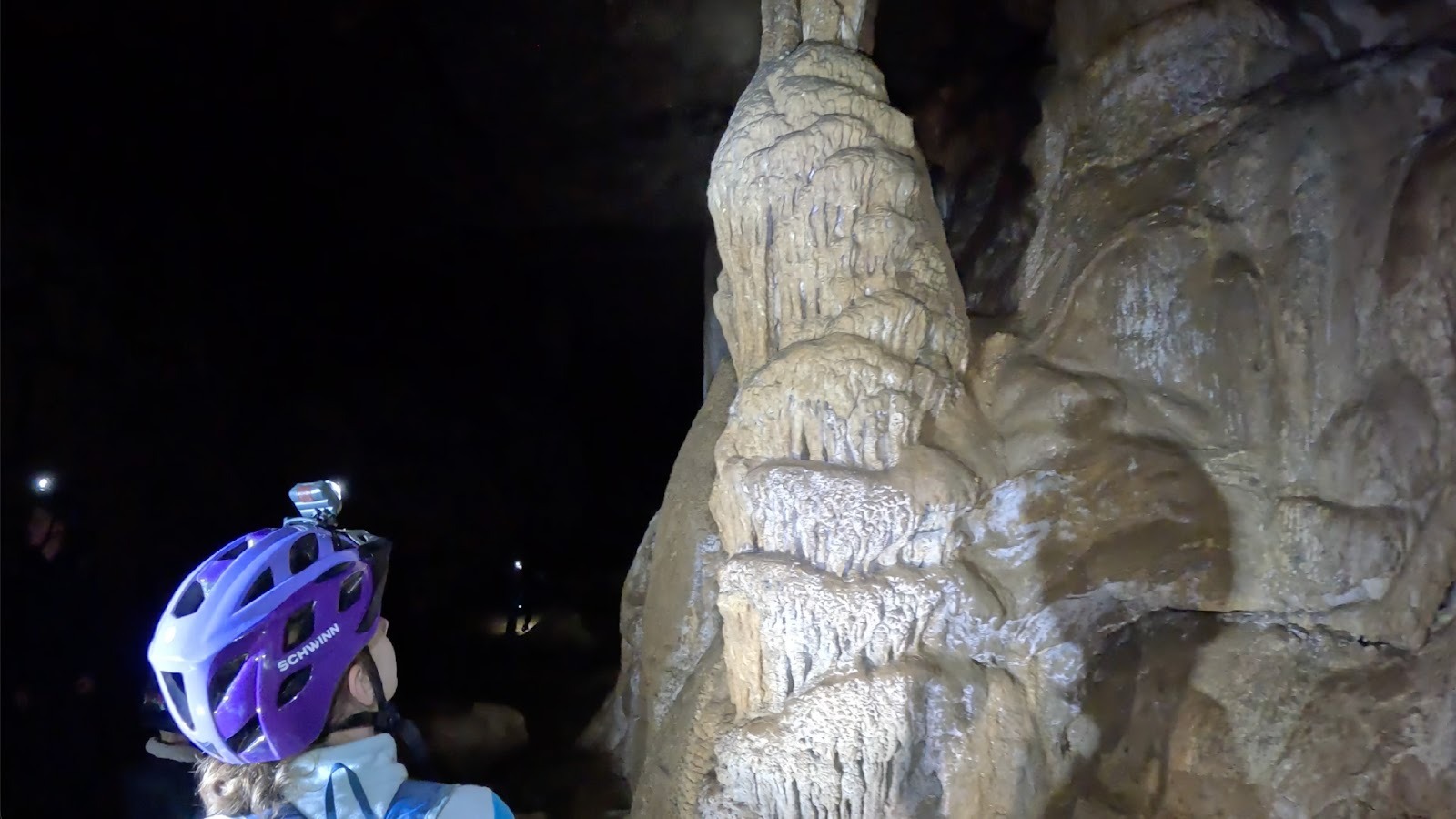
One of the cool things about Pettyjohn's is the variety of formations and features you'll see. There are flowstones, stalactites, and interesting rock formations throughout. The walls sparkle with moisture, and in some areas, you can see where water has carved smooth channels through the stone.
The entrance is a narrow gap between boulders that opens into a large main chamber. From there, the cave system extends deeper underground with various passages and rooms to explore. The cave is mostly horizontal, though you’ll need to scramble over boulders and down drops to lower levels.
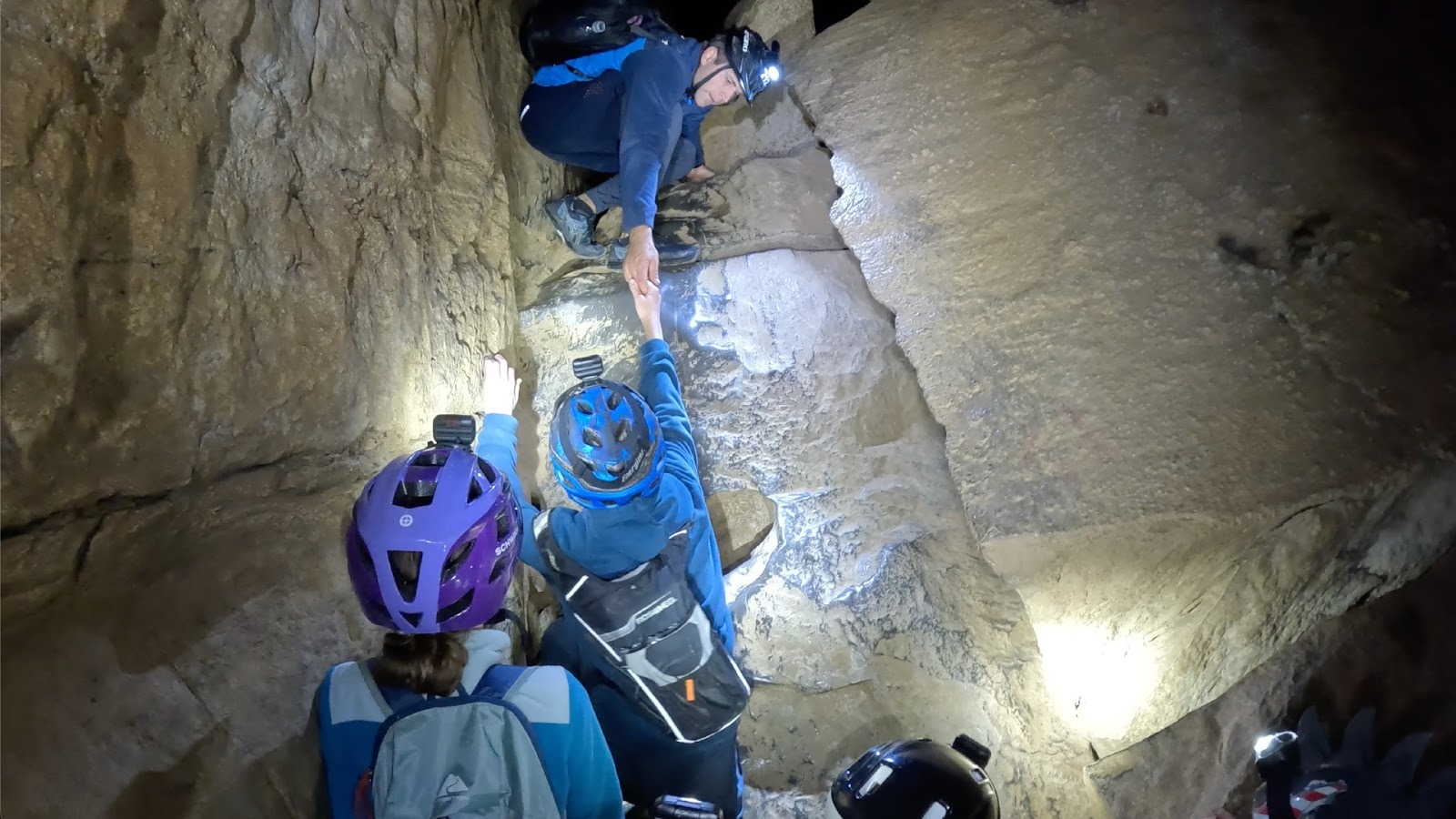
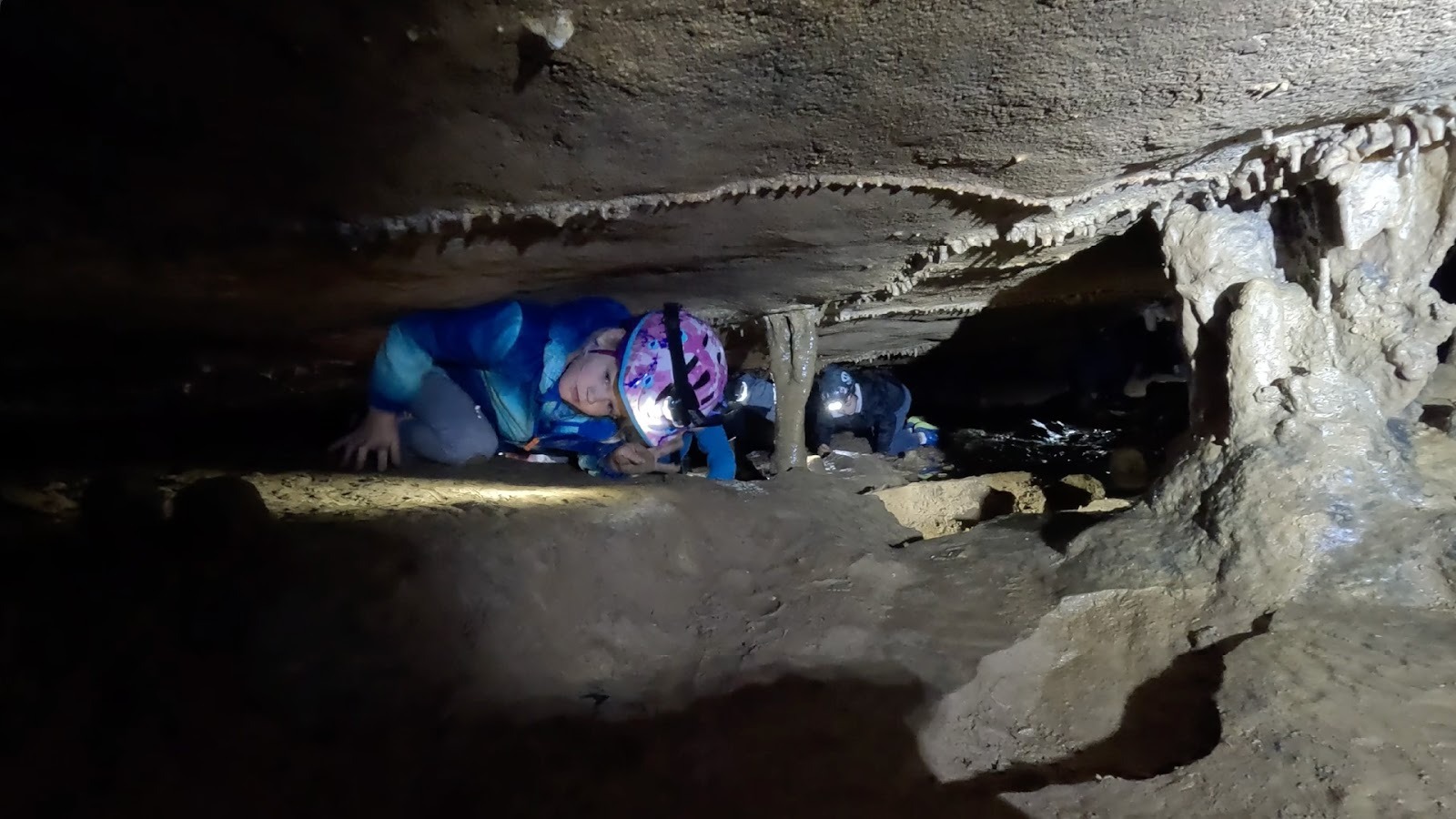
After passing through the main chamber, there's a wall of boulders to climb up, then it drops steeply down again. At the bottom on the other side, there's an opening down to a second level that goes even deeper into the ground. Eventually, this leads to Pancake Squeeze, a section you have to crawl through that's about 2 feet high and maybe 30 feet long. Our goal was the chamber beyond this.
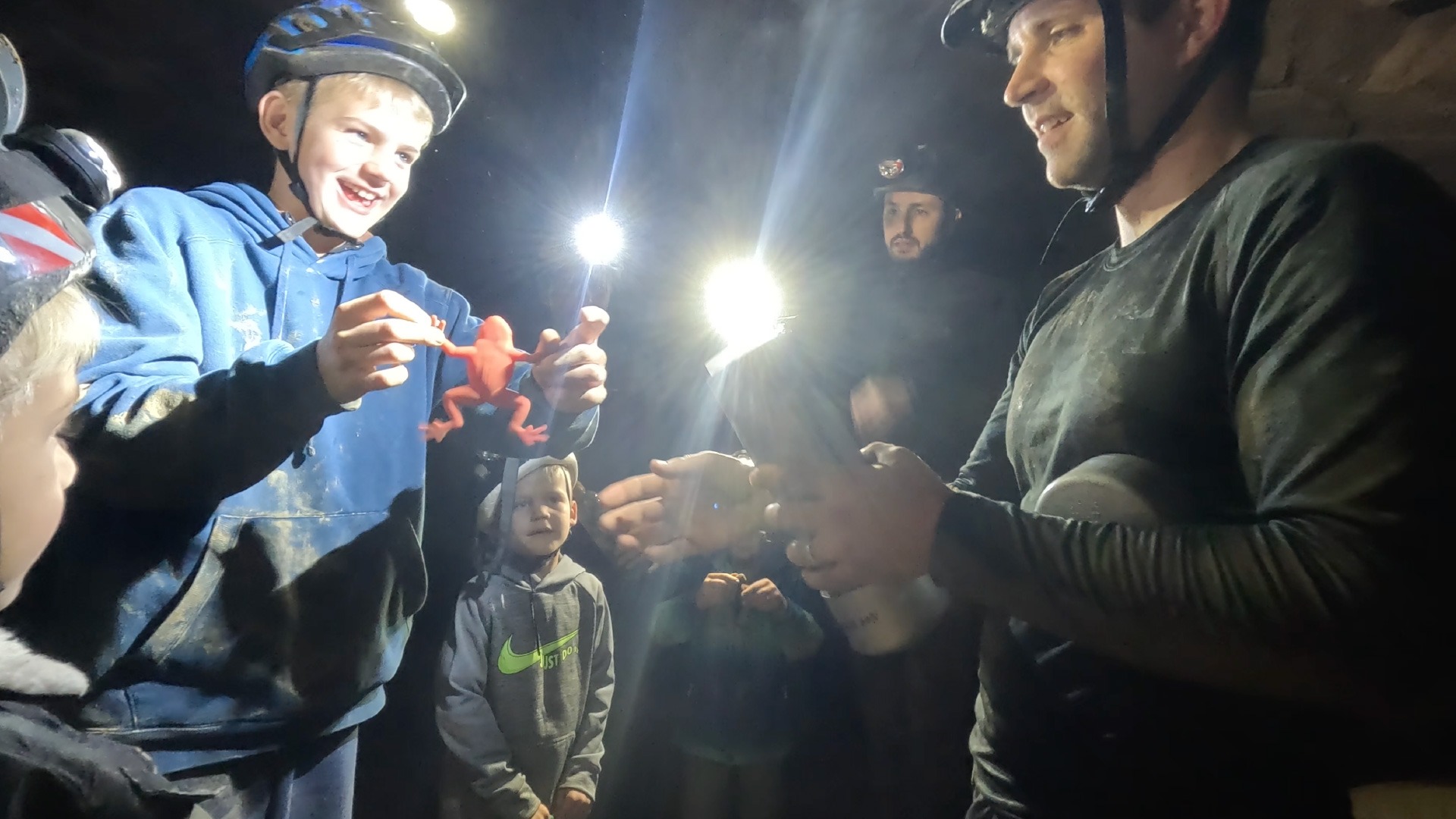
By the time we arrived at that point, the kids were all muddy and tired, so we took a break and had some snacks, then messed around for a while. Part of this was hiding a time capsule with a rubber frog in it. We challenge you to find it and add your own figurine. (We will return and remove it eventually.)
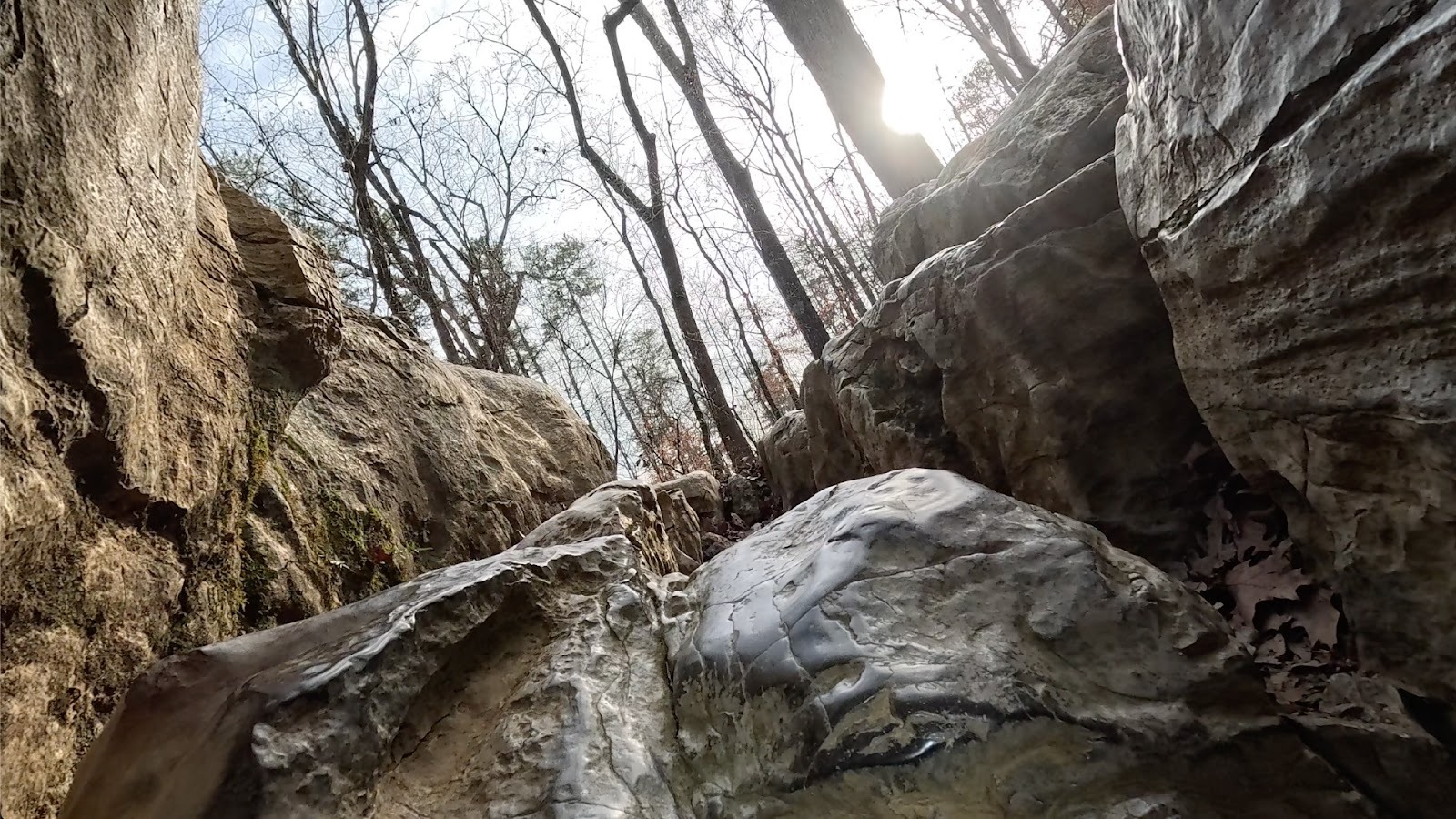
The climb out felt faster, though we did get a workout helping the kids. A cold blast of air greeted us as we emerged from the crevice. After two hours underground, it was great to see natural sunlight again.
Caving with kids is an adventure that combines physical challenge, exploration, and a bit of controlled danger that makes it genuinely exciting. It's not something you can replicate at a playground or in your backyard.
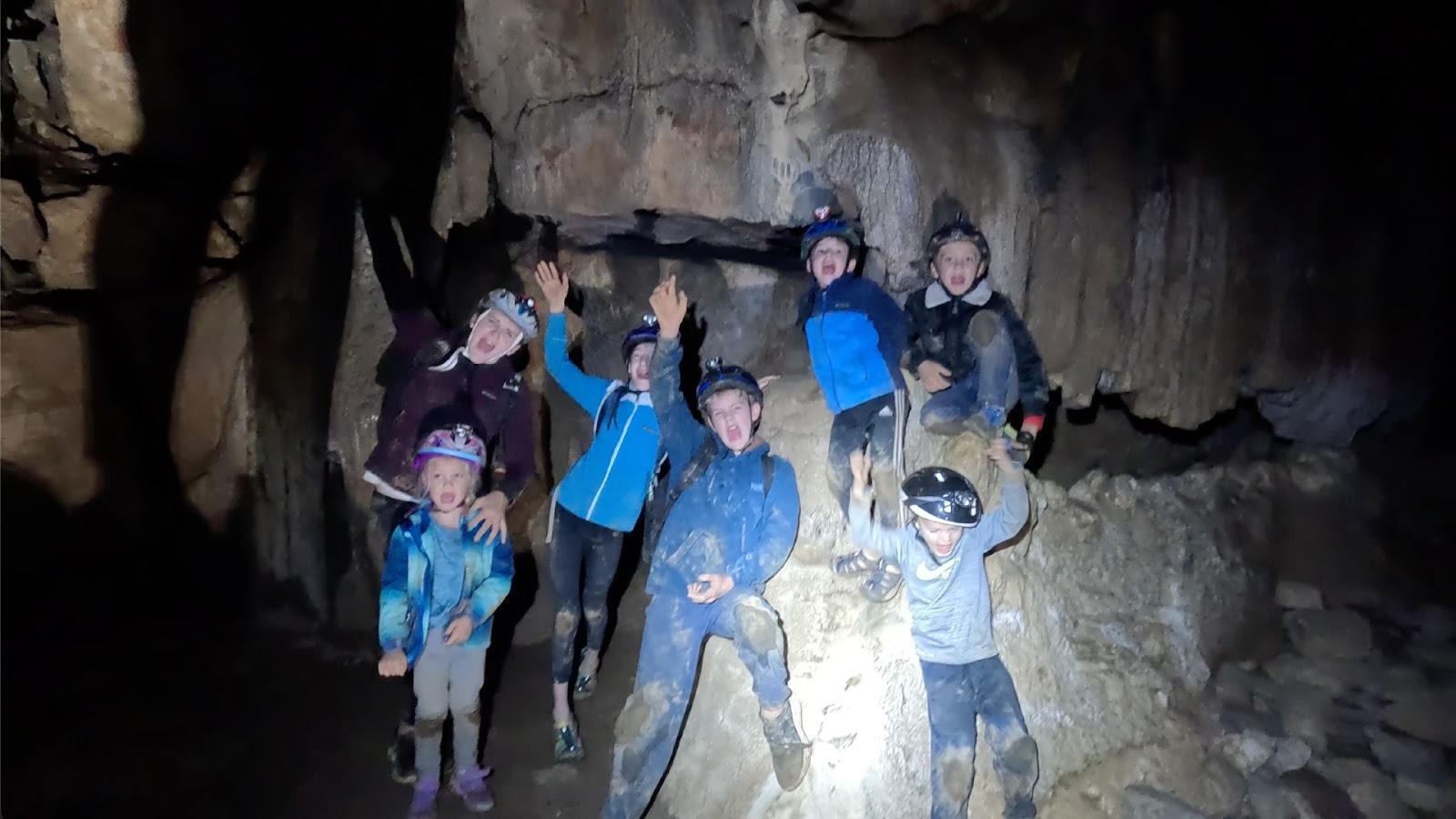
Yes, it requires preparation. Yes, you'll get dirty. And yes, there will probably be moments when someone is tired or scared or wants to turn back. But those challenges are exactly what make it worthwhile. Kids learn that they're capable of more than they thought, and you create stories that become family legend. Just remember: safety first, manage expectations, and don't push too hard. The cave will still be there next time.
Now get out there and do some exploring!

