
If you have a family with four bikes or more, you already know that most bike racks are not designed for you. We have five (David) and six (Micah) bikes, but we both lived with the hanging-style four-bike rack for over a year and it was a constant frustration.
Loading all the bikes up meant pulling the pin, lowering the rack, putting two kids bikes in the back of the car, closing the hatch, and raising the rack back up, then trying to cram three or four full size bikes on the rack. They never seemed to fit, and some of the youth bikes with sloped top tubes required an adapter. It made heading out to the trails a frustrating experience.

After a lot of research we both ordered the VelociRAX 6 Max. This review is not sponsored. Here's what we found after assembly, an initial test, and a 5,000-mile road trip to Utah and back with the racks fully loaded. The TLDR is that it is a great solution, but there are some quirks you need to know about.
The VelociRAX 6 Max is a hitch-mounted vertical rack that holds up to six bikes in individual wheel baskets. Rather than hanging bikes horizontally from the top tube, each bike hangs by its front wheel in an up and down position and is secured with straps. The rack tilts down on a hydraulic dampener to allow easy trunk access without removing bikes.
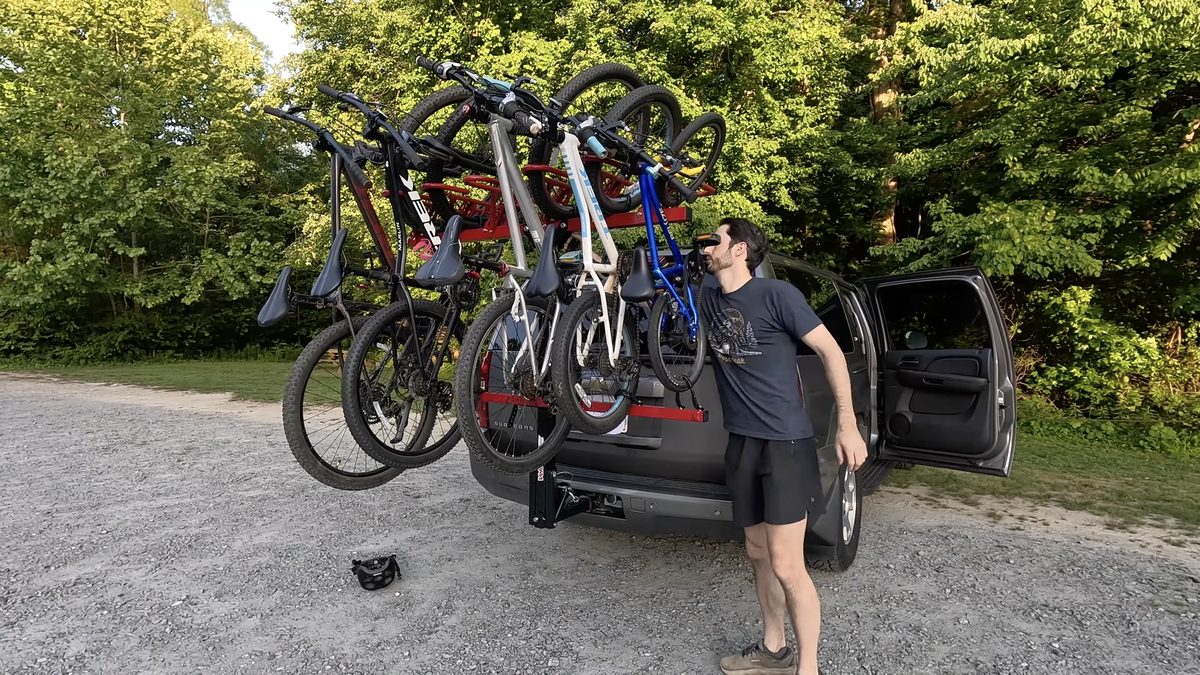
It accommodates a wide range of wheel sizes and tire widths, which matters a lot when you're hauling a mix of kids' bikes and adult mountain bikes.

The bike racks arrive in pieces in several different boxes. Assembly is straightforward but requires a range of large wrenches or sockets and some patience. The hardware is hefty and well-made, which is reassuring but also means it takes a little while to put together. Budget one to two hours for a couple adults working together. You can see an assembly video here.

One thing we noticed right away is that the hitch insert is noticeably solid, which helps with minimal wobble on the road (a good thing). More on that below.
One thing to know upfront: the standard baskets are designed for wheels 20” and up. For small kids bikes with 16-inch tires or smaller, the standard basket has too much room to hold them securely. We tried a pool noodle hack first to see if we could avoid buying the small tire basket accessory. It didn't work well for the smallest wheels.

VelociRAX sells extra small tire baskets to solve this problem, which run about $150 for two. If you have kids on 16-inch or smaller wheels, budget for it. 18-inch wheels are on the line. You probably could get it to work with a pool noodle wrapped around the basket the top wheel goes in. For anything 20 inches and up, the standard baskets worked fine.
Yes, you absolutely can. But it takes some practice. There is actually a particular order you’ll need to load them in and we didn’t realize this at first. In general, you want to load bikes left to right, smallest wheel size to largest. But there are some exceptions.
The order matters because bikes in adjacent baskets can contact each other depending on frame geometry, handlebar width, and how each bike sits in the basket. Mountain bike frames sit differently than cruisers, and that affects how they stack next to each other.
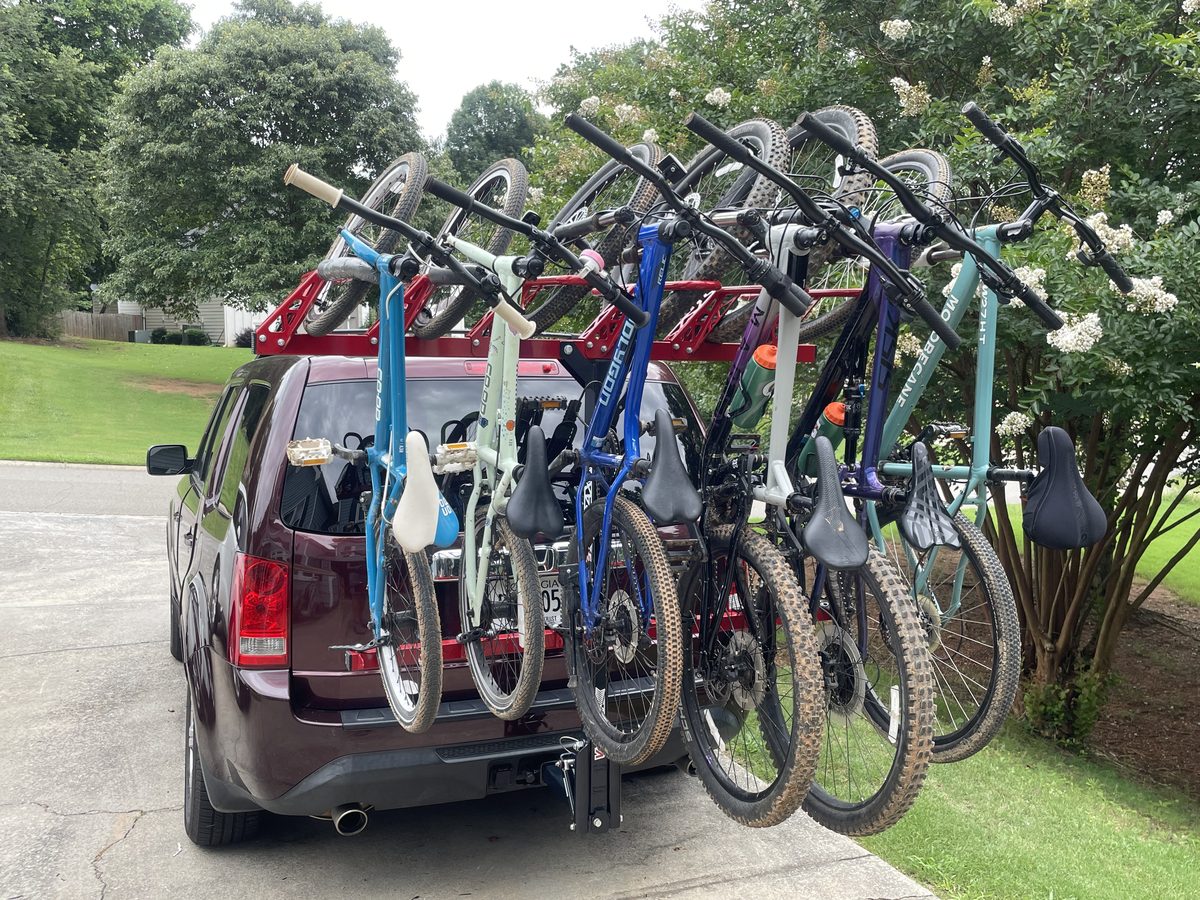
Expect to spend time figuring out your specific combination of bikes. Once you've dialed it in, write it down or take a photo so you're not solving the puzzle fresh every time. By the second or third loading on our road trip it was fast and predictable. The first few times it wasn't.
One hard-won lesson on brake levers: on a few of our smaller bikes, the brake levers stuck out enough to rub against the frames of the adjacent larger bikes during the drive. We didn't notice until we saw some scratches. The fix is simple: wrap foam (pool noodle) around the protruding brake levers before loading. We now keep a few pieces of foam in the back of the car specifically for this.
This is one of the VelociRAX's best features for families. Pull the lever and the whole rack tilts down on a hydraulic dampener, giving you full access to the rear hatch without touching the bikes. It works smoothly and is a genuine quality-of-life improvement over racks that require removing bikes to get into the car.
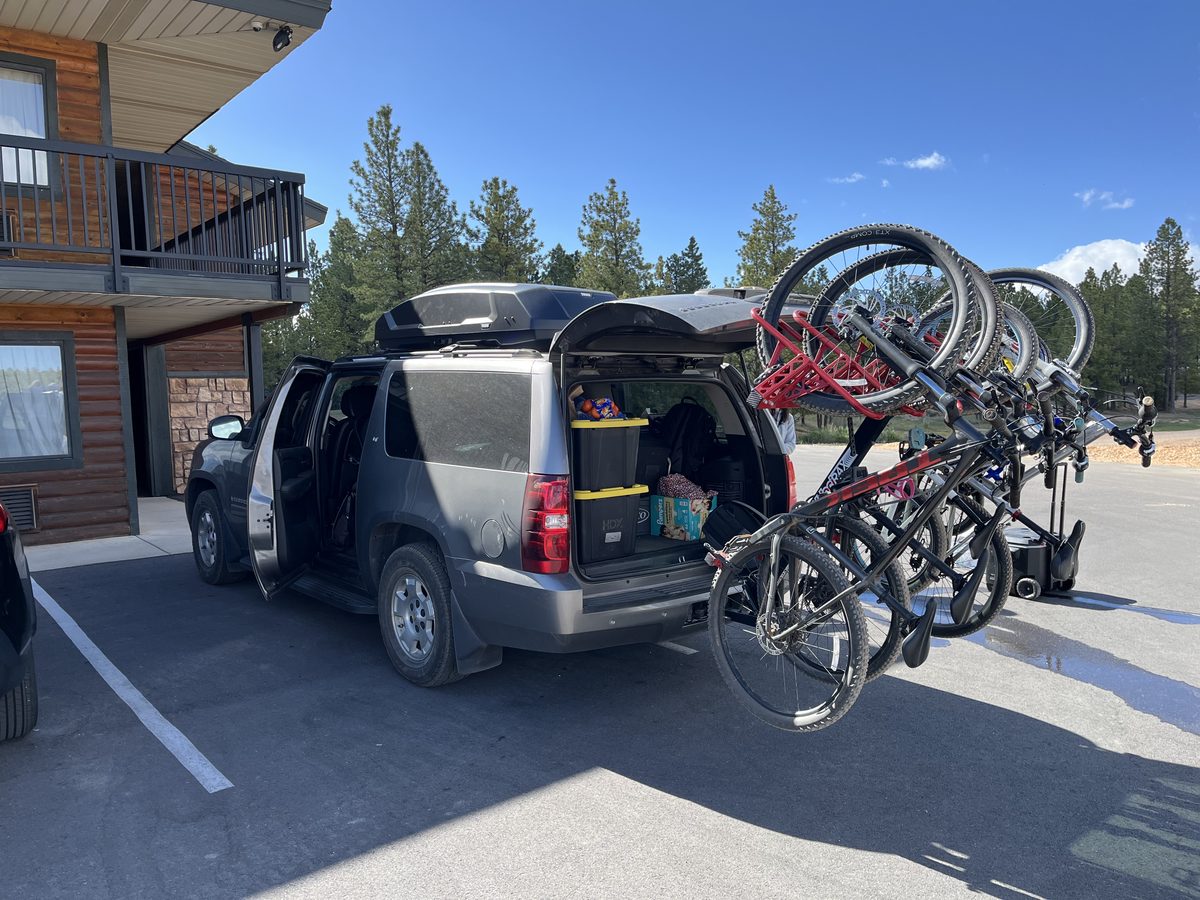
On a long road trip, being able to get into the trunk quickly at rest stops, hotels, and trailheads without unloading anything is a bigger deal than it sounds. BUT, just remember that pushing the rack back up when it is fully loaded requires a significant amount of strength. We (the dads) can do it alone, but our wives probably couldn’t push up six bikes by themselves.
Always use the top rubber straps to secure the wheels in the baskets. Every single time. No exceptions.
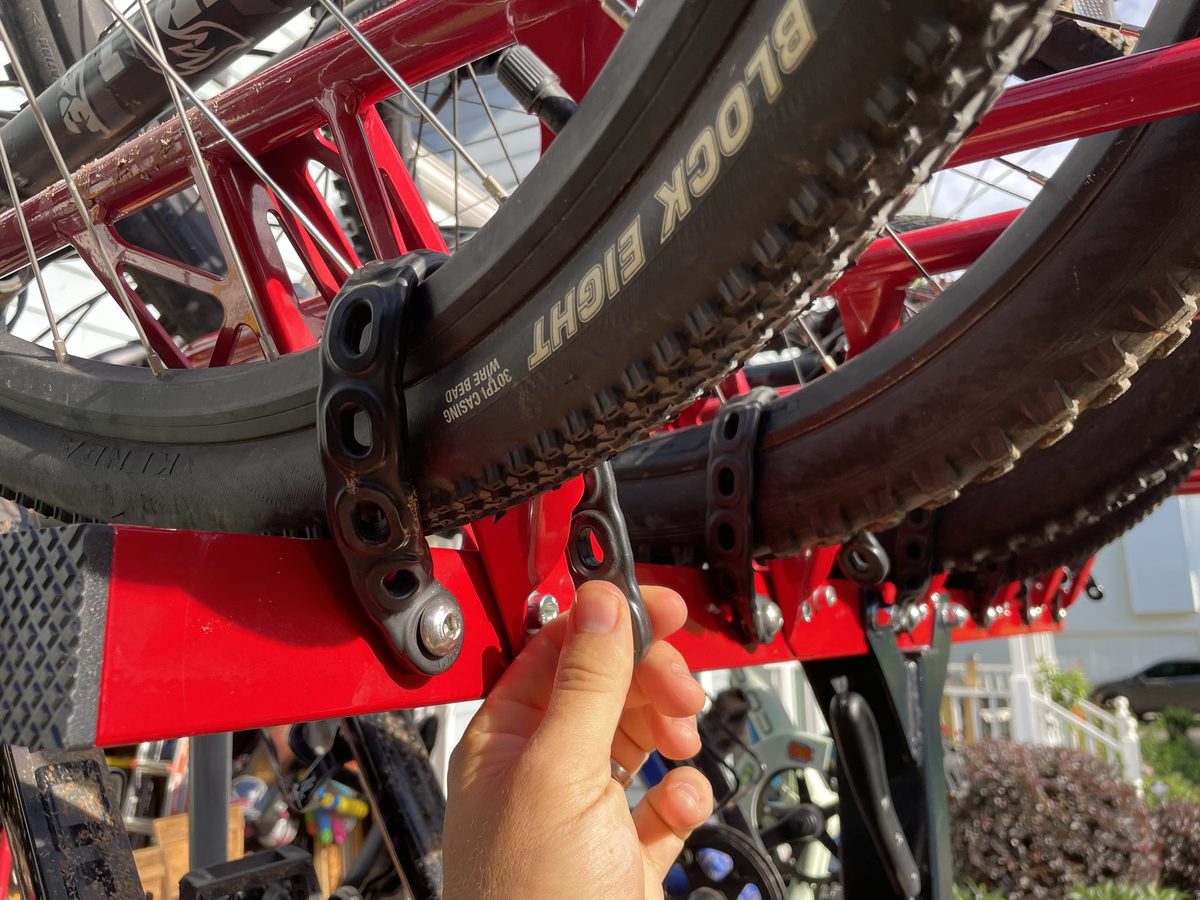
We learned this the hard way. On a short trip to a store a few miles away, I didn't strap the top wheels because I figured it wasn't necessary. I think the directions even say they are for highway use or something like that. Anyway, I hit a significant bump and the bikes came out of the upper baskets and were dragged along the ground behind the car. The damage was repairable, but it was an expensive and completely avoidable mistake. DON’T DO IT!

The straps are there for a reason. Use them every time you drive, even if you're just going around the corner!
What we like:
What to know going in:
For a family with five or six bikes, the VelociRAX 6 Max is the best solution we've found. Nothing else comes close for hauling that many bikes while still having easy trunk access and a reasonably simple loading process. Once you've figured out your specific loading order it becomes fast and reliable.
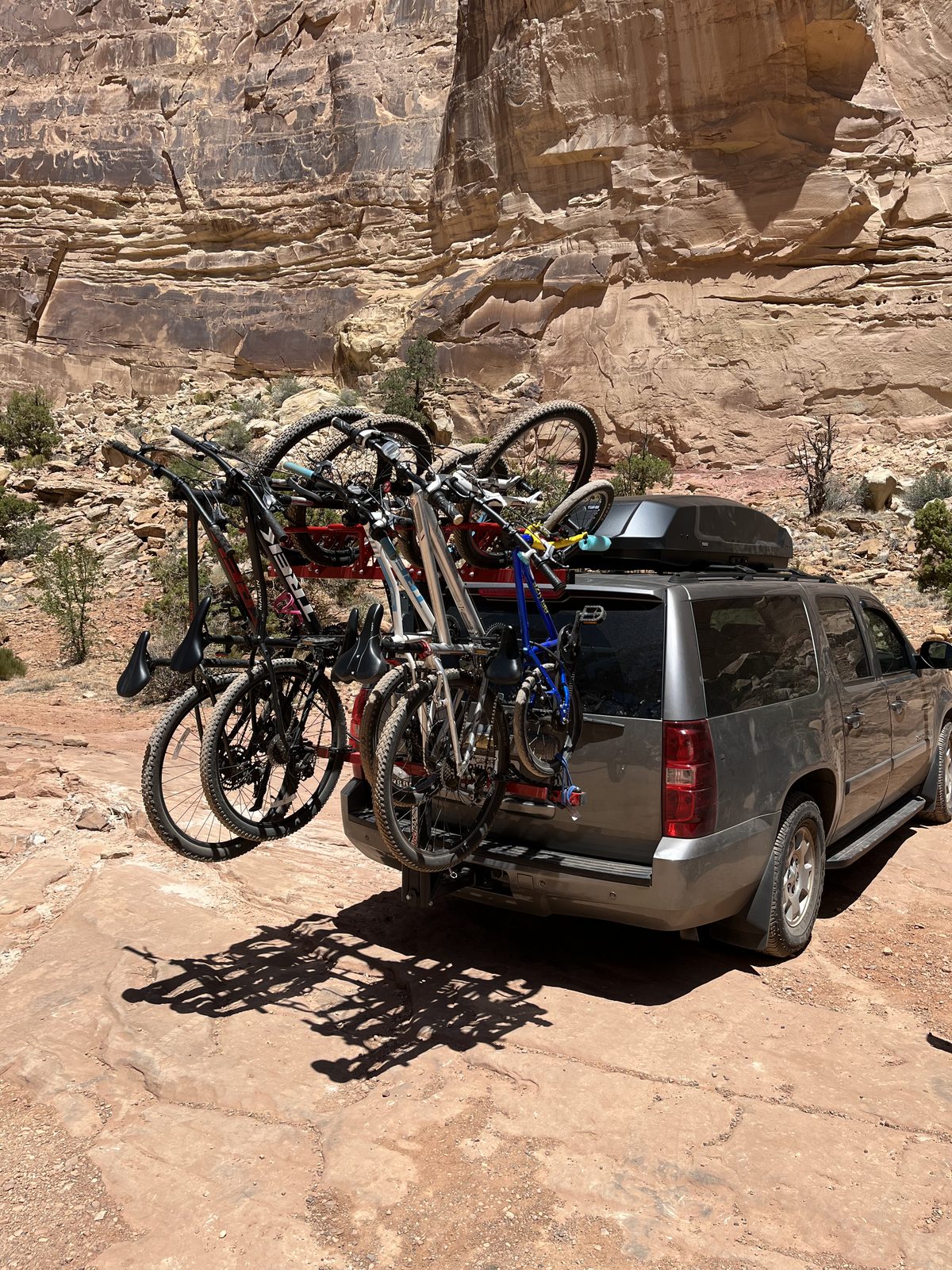
We drove it 5,000 miles across the U.S. to Utah and back with six bikes on it and had no structural issues or concerns.
Just use the straps every time.