
If you've never taken your family tent camping before, the gear lists and logistics can feel overwhelming before you've even left the driveway. It doesn't need to be. Camping is one of the most accessible outdoor activities there is, and a good first trip can open the door to a lot of other adventures from there. So, here are eight tips to make your first time out a success.
For “shelter” you need three things: a tent, a sleeping pad, and a sleeping bag for each person.
If you're going out in good weather, tents don't have to be expensive. Ours came from a garage sale years ago and has held up just fine. When you're buying, the main thing to look for is size. Make sure your whole family fits comfortably. For a first trip, a basic dome tent is all you need.
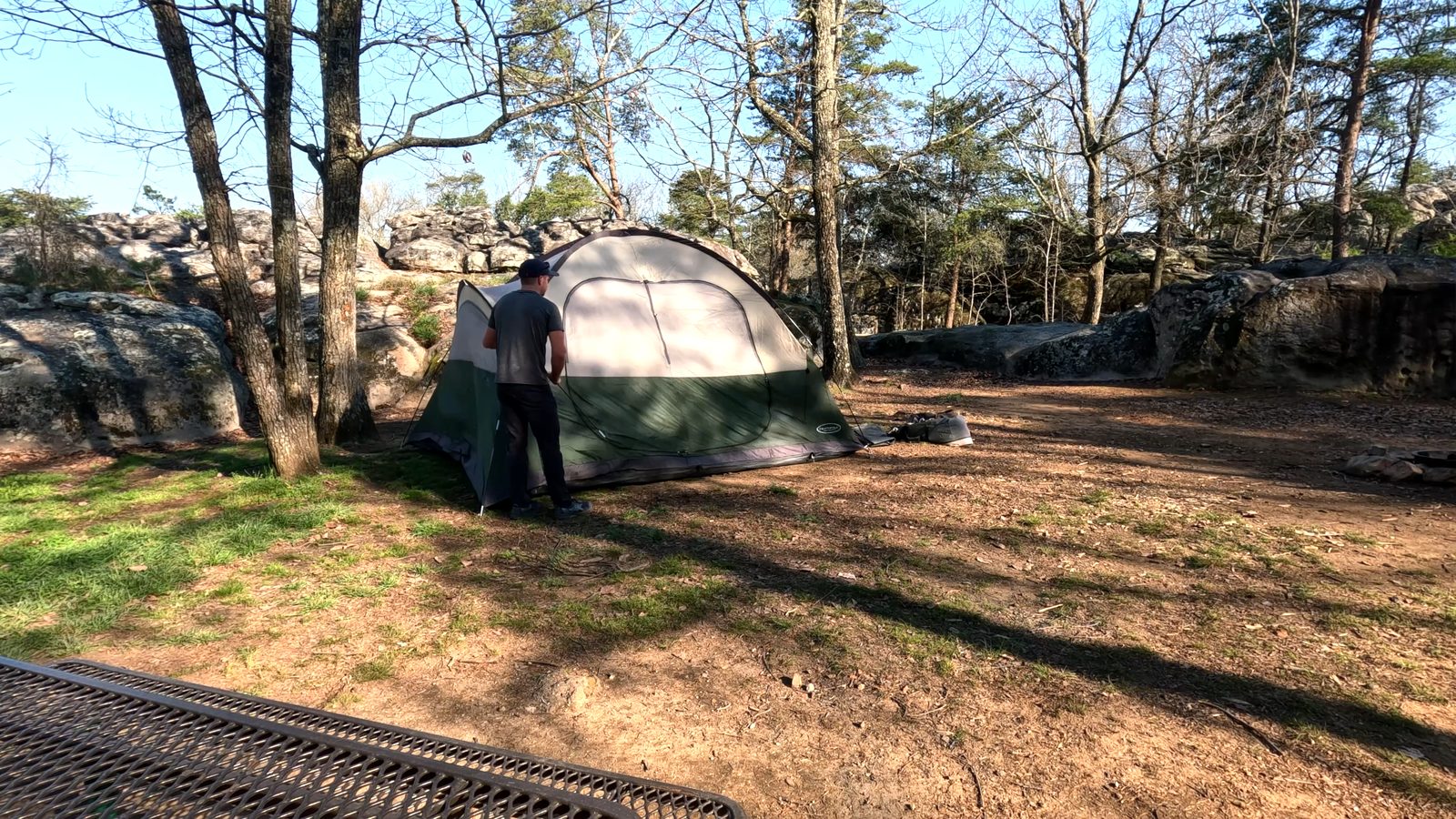
For sleeping pads, you've got options ranging from cheap foam rolls to inflatable backpacking pads to full air mattresses. If you're camping next to your car, comfort level is really the only consideration. If you ever want to hike to your campsite, you'll want something lighter and more packable.
Sleeping bags are rated by temperature. Pick one appropriate for the season you're camping in and you'll be fine.
One bonus tip: pick a weekend with clear weather and you can leave the rain fly off and sleep under the stars. Pretty cool experience.
You do not need to walk into REI and spend a fortune before your first trip. Walmart's Ozark Trail brand is a legitimate starting point and covers everything you need: tents, sleeping bags, pads, and basic cooking gear. It's not specialty equipment, but for car camping in mild weather it gets the job done. Another option is buying used gear on Facebook Marketplace.
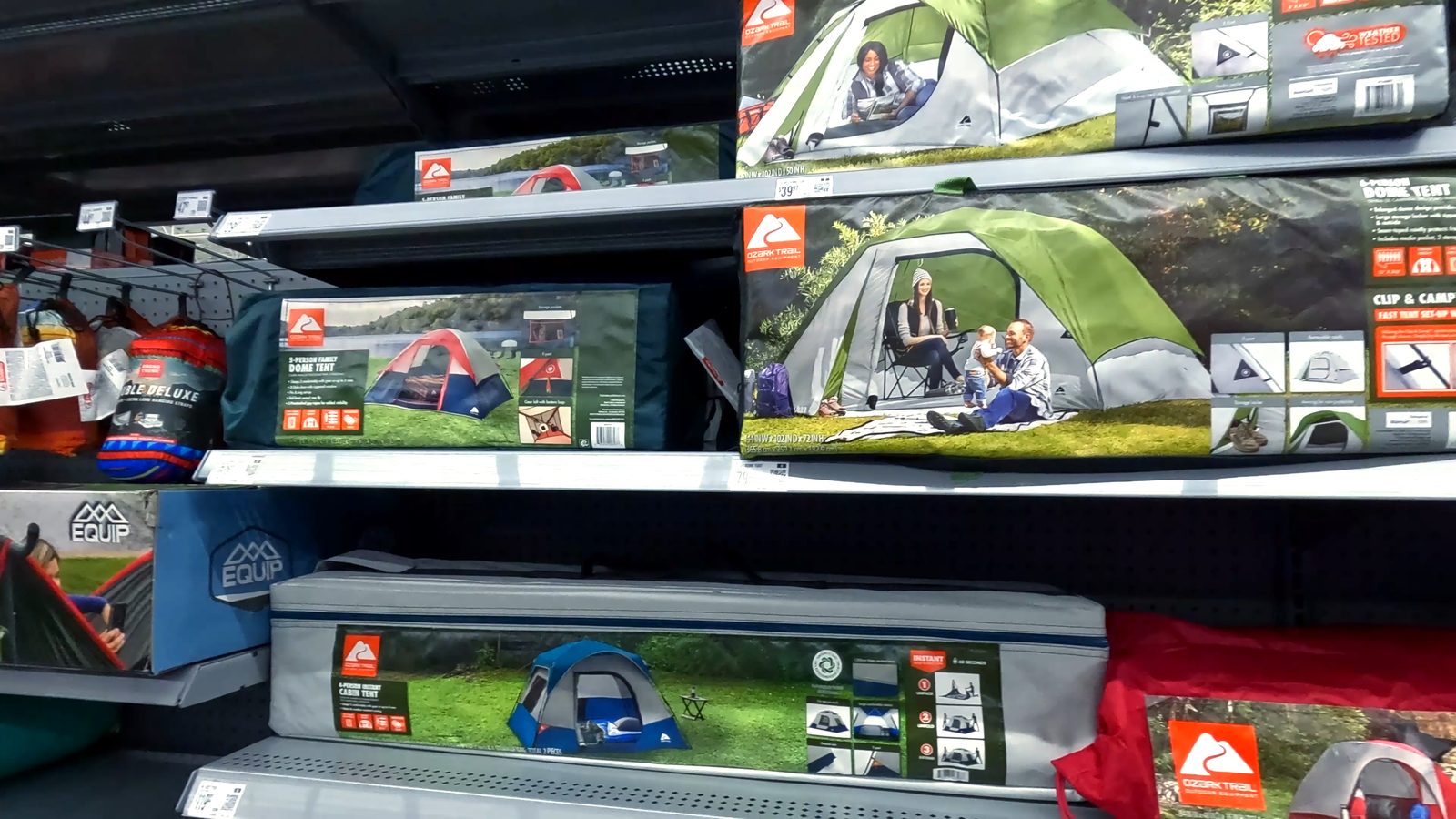
As you get more serious about camping or move into backpacking, that's when it makes sense to invest in lighter, more durable gear from premium brands. But start simple, go a few times, and figure out what you actually need before spending the money.
One thing to avoid: bulky inflatable mattresses. In our experience they tend to fail at the worst possible moment. A foam pad or a cot is more reliable and less stressful.
For a weekend trip, food doesn't need to be complicated. We do most of the cooking at home and just reheat at camp. Pre-cook your sausage, prep your sides, and pack everything in a cooler with ice. At camp you're just warming things up, which takes about five minutes on a small camp stove.
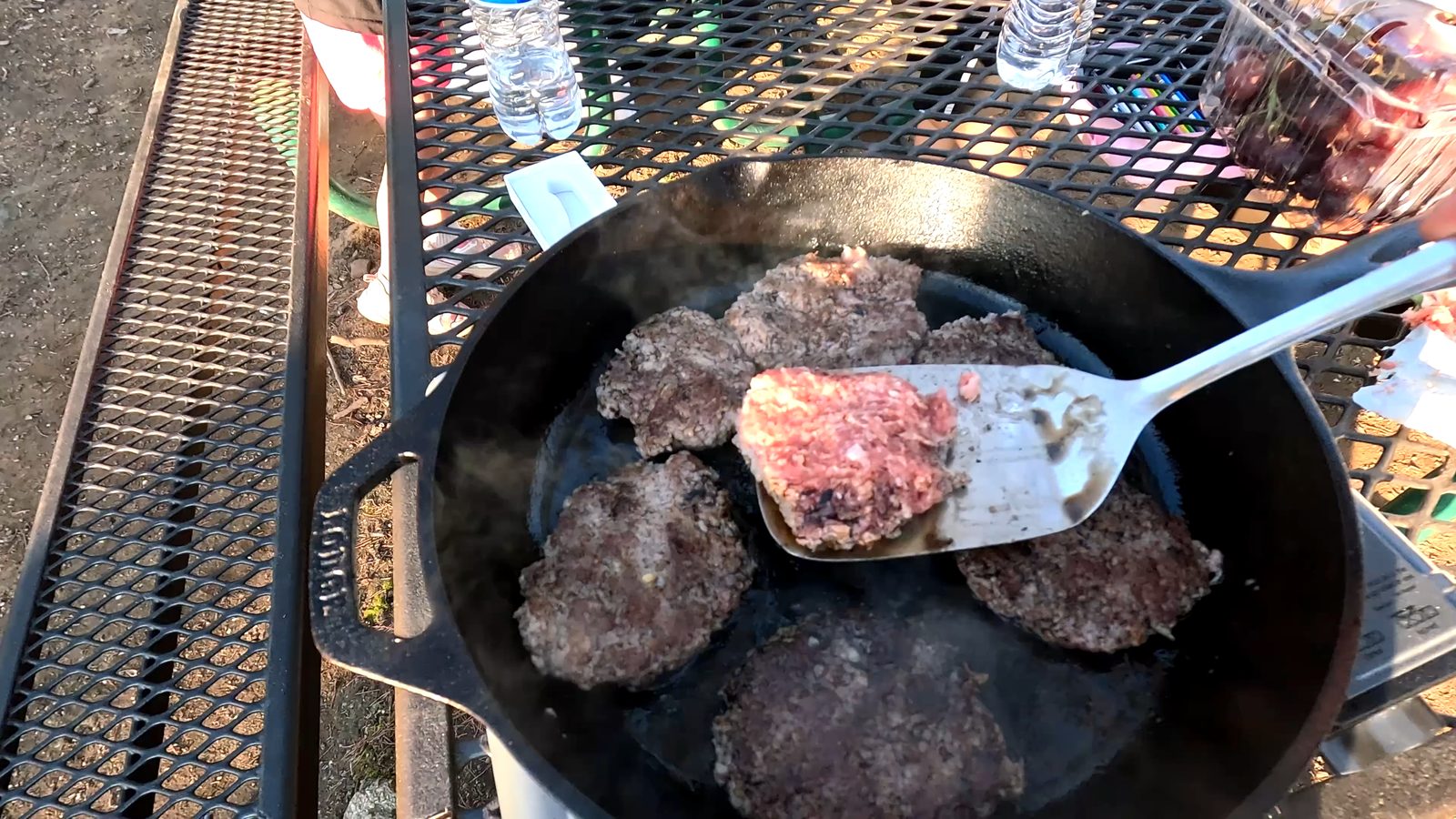
A compact camp stove that runs on a small fuel canister is worth having. They heat up fast, pack down small, and are genuinely useful for breakfast and dinner. Alternatively, many campsites have charcoal grills available — just don't forget to bring the charcoal.
For water, a flat of water bottles handles a short trip easily. For longer trips, a five-gallon jug with a dispenser works well.
And if you want to add something special to your meal, try making campfire bread over the fire. We tested it recently and the kids gave it high marks. Full recipe and instructions in our campfire bread post.
Once shelter and food are covered, the fun part is easy. A campfire is the natural center of the evening. S’mores, story time, reading out loud around the fire — these are some of our favorite camping traditions. More on building a great campfire in tip #8.

During the day, bring whatever your kids enjoy doing outside. We almost always bring bikes since most campgrounds have roads and open areas to ride. Cornhole, frisbees, and similar games pack flat and take up almost no space.
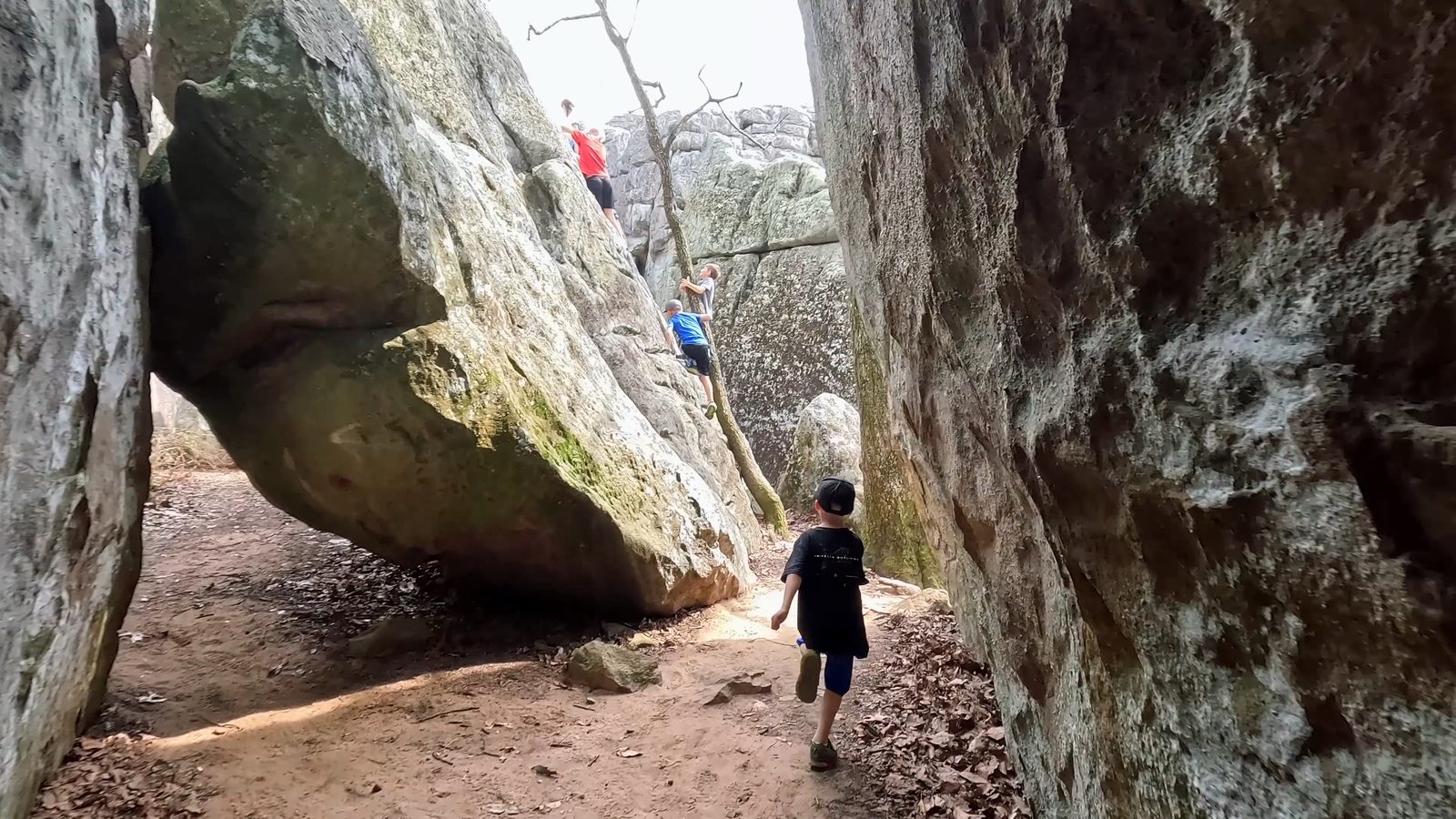
The other big advantage of camping is proximity to whatever outdoor activity is nearby. On this particular trip we spent a good chunk of time bouldering and rock climbing around Cherokee Rock Village. Pick a campsite near something your family wants to explore and the activities take care of themselves. In the summer, lakes and rivers provide all-day entertainment.
Camping requires a lot of gear, and forgetting something critical on the morning of a trip is a special kind of frustration. We keep a printed checklist and run through it every time. It takes five minutes and has saved us more than once. You can make a copy of our basic camping checklist template here to use for your own trips.
We also keep a dedicated storage bin for camping gear. The stove, the extra pot, the headlamps, the stakes all live in one place year-round. Packing becomes: grab the bin, check the list, load the car. Still a lot of work, but definitely more manageable than hunting down every single thing needed.
Before you book, look at the campground map. Pick a site that's close to the bathrooms and, if your kids are young, close to the playground. It sounds like a small thing until you're walking a half-asleep four-year-old across a dark campground at 2 a.m.
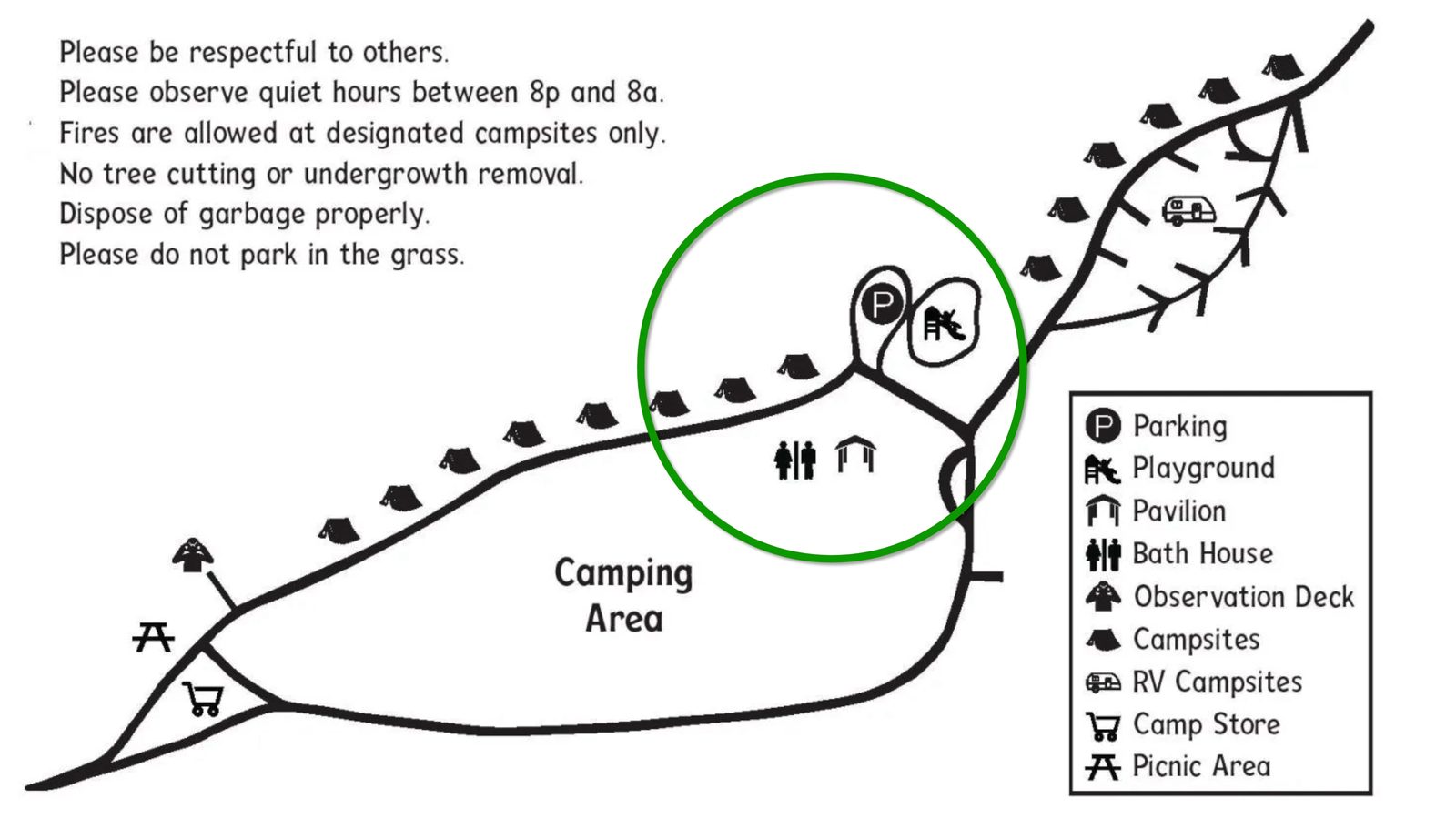
Also look at what's nearby. A campsite next to a lake, a trail, or interesting terrain like rock formations makes the whole trip better without adding any cost. Many people never get to experience the best parts of nature because they stay on the beaten path. Tent camping can help you get out and experience some pretty amazing parts of creation.
Weather is the single biggest variable in if a camping trip is a good time or a miserable one. For your first trip especially, stack the odds in your favor. Spring and early fall tend to offer the most comfortable temperatures. Avoid the peak of summer heat and anything that looks like rain.
Keep an eye on the forecast in the days leading up to your trip. If it looks bad, postpone. A rained-out first camping trip with kids is a fast way to make sure there's no second one.
Campfires are one of our favorite aspects of camping. At the end of the day, everyone gets to relax and watch the wood burn into dancing embers. Not only does it keep you warm if the air gets chilly, but you can also make s’mores, bake some campfire bread, and more.

Starting a fire is a skill worth learning properly, and it's a great one to teach kids. The basics: split a thin log into small kindling pieces, build a teepee shape with the kindling in your fire ring, put crumpled paper in the center, and light it. Once the teepee catches, start adding larger logs around the outside, keeping the general teepee structure as the fire grows. It takes a little patience the first few times but becomes second nature quickly. No fire starters or lighter fluid necessary.
Camping is not always going to be perfectly comfortable. It might be hotter or colder than expected. You might not sleep as well. Something will probably go wrong in a small way. That's actually part of the point. Learning to be comfortable being a little uncomfortable, to enjoy being outside and dirty and away from the usual conveniences, is genuinely valuable for kids. Don't oversell it as a resort experience. Sell it as an adventure.
Once your family has a few camping trips under your belt, backpacking is a natural next step. It's a bigger commitment, but it opens up a whole different category of places you can get to. Our beginner backpacking guide with kids is a good place to start when you're ready.