
We'll be honest: Capitol Reef was not a park we were particularly excited about going into our southern Utah road trip. We'd already done Arches and Canyonlands, and Capitol Reef felt like something we were checking off on the way to Bryce Canyon and Zion. But looking back, it is one of our favorite stops from the entire trip.
If you’re doing the Mighty Five with kids and you’re tempted to blow through Capitol Reef quickly, slow down. Maybe add an extra day. That’s what this post is about.
Capitol Reef is one of the Mighty Five national parks in south Utah, and it sits about two hours west of Arches and Canyonlands and two to three hours east of Bryce and Zion.
The name comes from two things early pioneers noticed: the maze of cliffs through that part of the country was tough to navigate, like a reef at sea, and there is a prominent dome-shaped rock that looked like the U.S. Capitol building. Someone put them together and came up with “Capitol Reef”.
The park also sits on the site of an old Mormon settlement from the 1880s, which gives it a layer of history you don't find at the other Utah parks. There are historic buildings to visit and the fruit orchards the settlers planted are still there, and (sometimes) open to visitors. More on that in a minute.
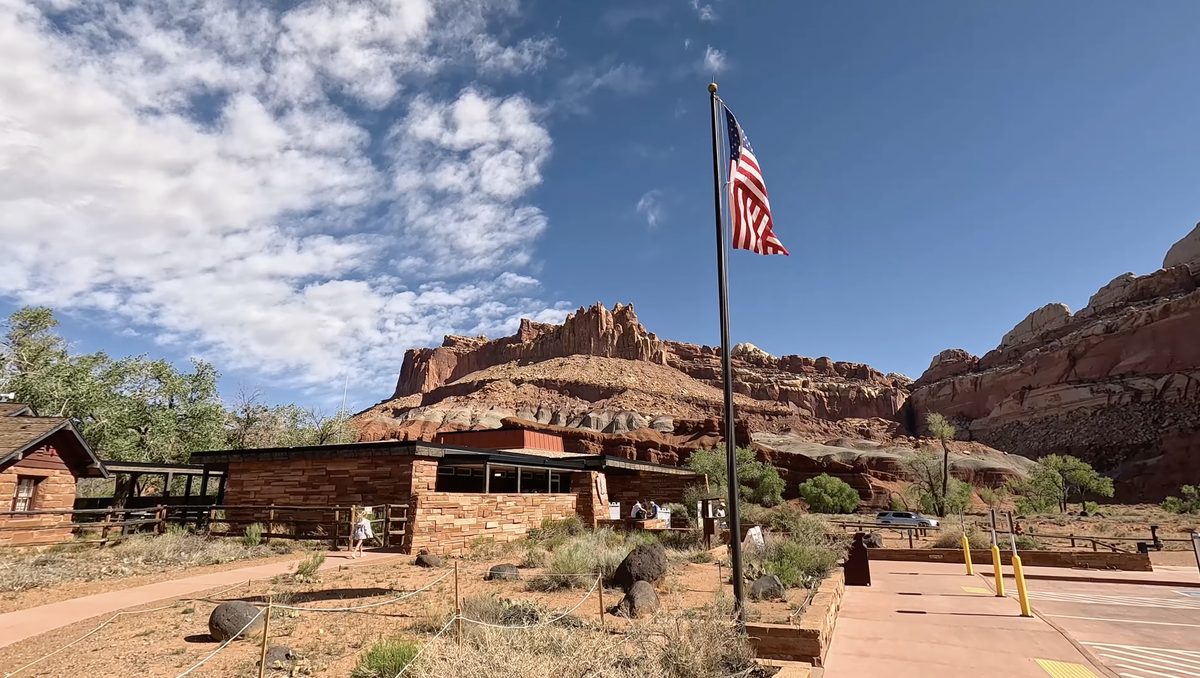
When you first arrive at the park, there is a smallish visitor center right off the road. The entrance felt a little underwhelming at first, but as you keep driving into the park there is quite a lot to see and do.
Where to stay: We stayed at the Broken Spur Inn in Torrey, about 10 minutes from the park entrance. There are basic dining options around, but this is a really small town.
This turned out to be one of the most memorable things we did. The Mormon settlers who lived here in the 1880s planted fruit orchards, and the National Park Service still maintains them. During harvest season, visitors can walk into the orchards, pick fruit straight off the trees, and pay by the pound at an honor station.
We picked cherries at $4 a pound and they were genuinely delicious. The kids thought picking food directly from a tree in a national park was pretty cool, and honestly they weren't wrong.
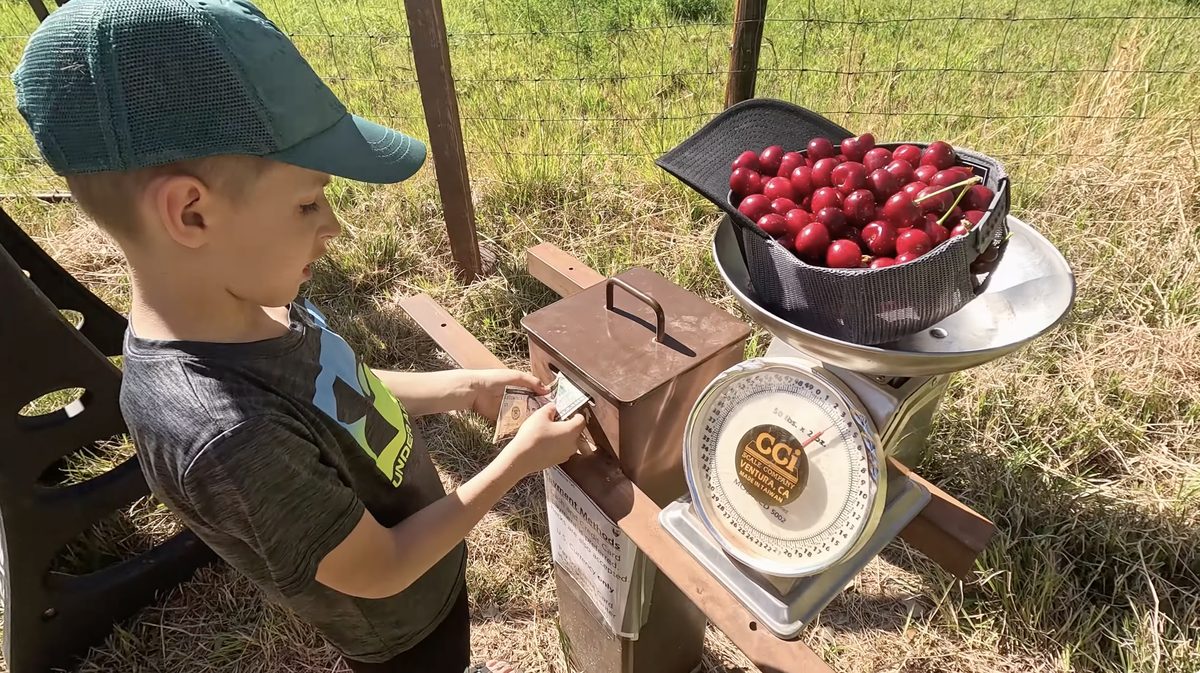
What's available depends on when you visit. The season generally runs from late June through October and covers cherries, apricots, peaches, pears, and apples at different points. But availability can also vary by day. The afternoon we first arrived the orchard was open for a few hours, but they closed by evening and didn’t reopen the next day. If this is a priority, talk to the rangers in the visitor center when you first arrive and make sure you know when the orchard will be open during your visit.
After you pass the visitor center and orchard you’ll come to some of the other pioneer buildings. The historic Gifford House preserves the story of the area's early settlers with period furnishings and local exhibits. There's also a blacksmith shop nearby where the settlers would have made horseshoes, plows, shovels, and according to one of our kids, swords. Probably not swords.
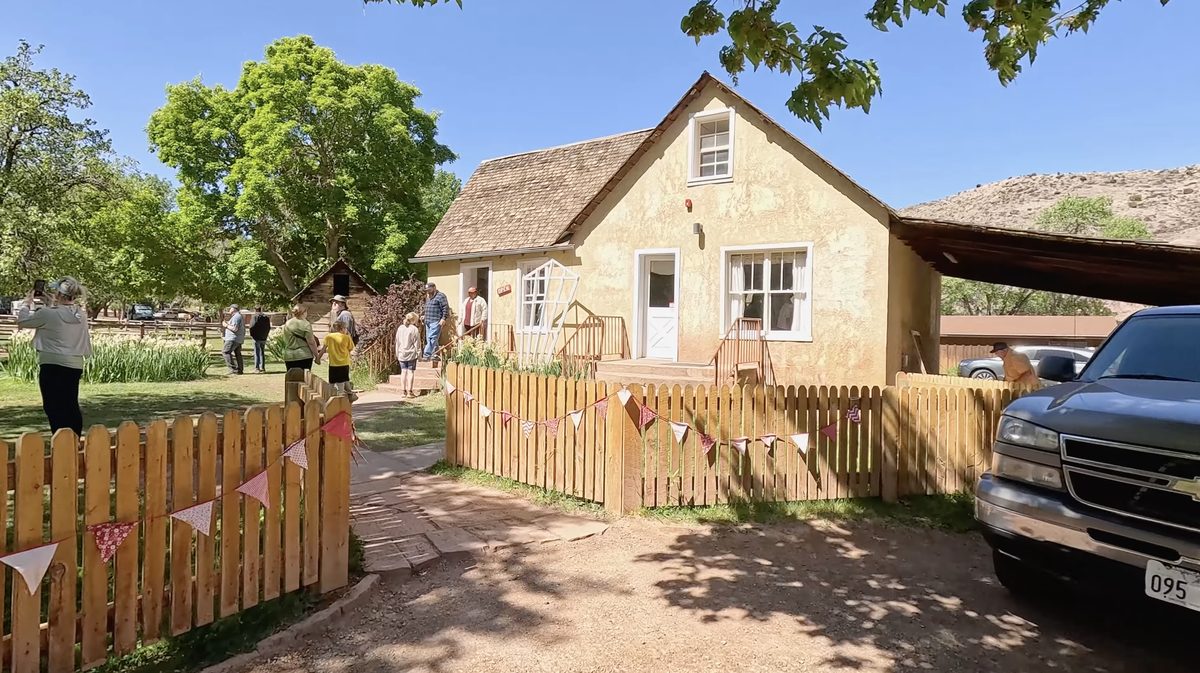
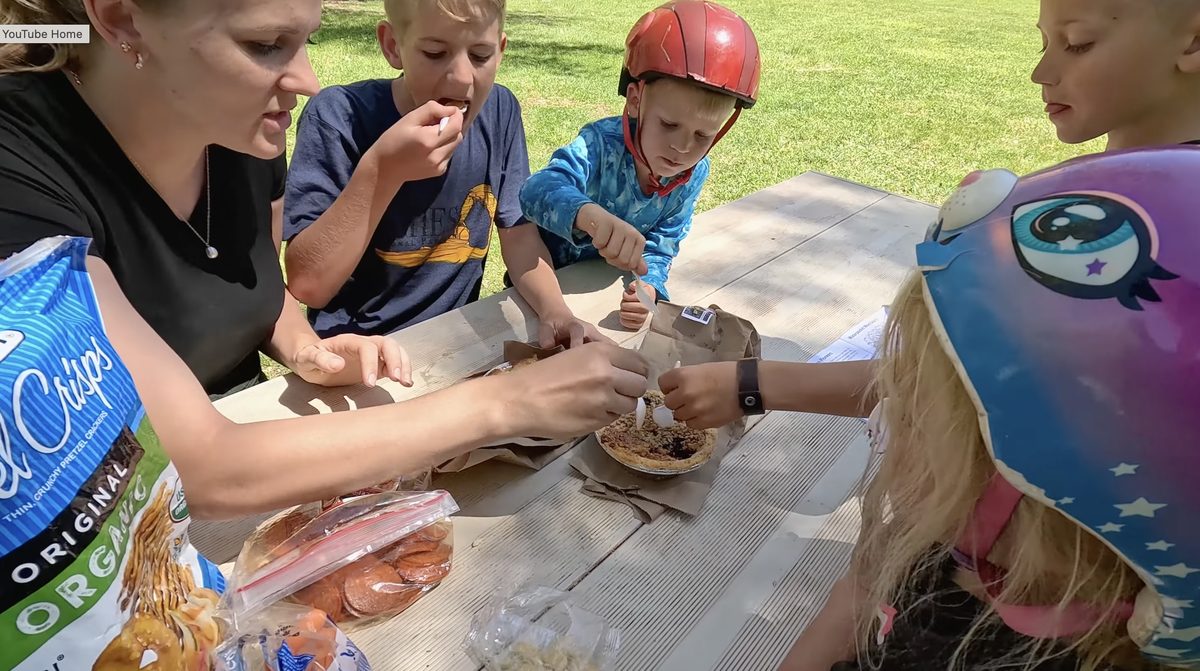
More importantly, the Gifford House sells pies made with fruit from the park's own orchards. We got a few and they made a great bribe to get the kids to complete some of the hikes that day. In the afternoon, we ate them in a grassy area near a stream at the entrance of the park where wild deer chill out. It was a pretty good bookend for the day.
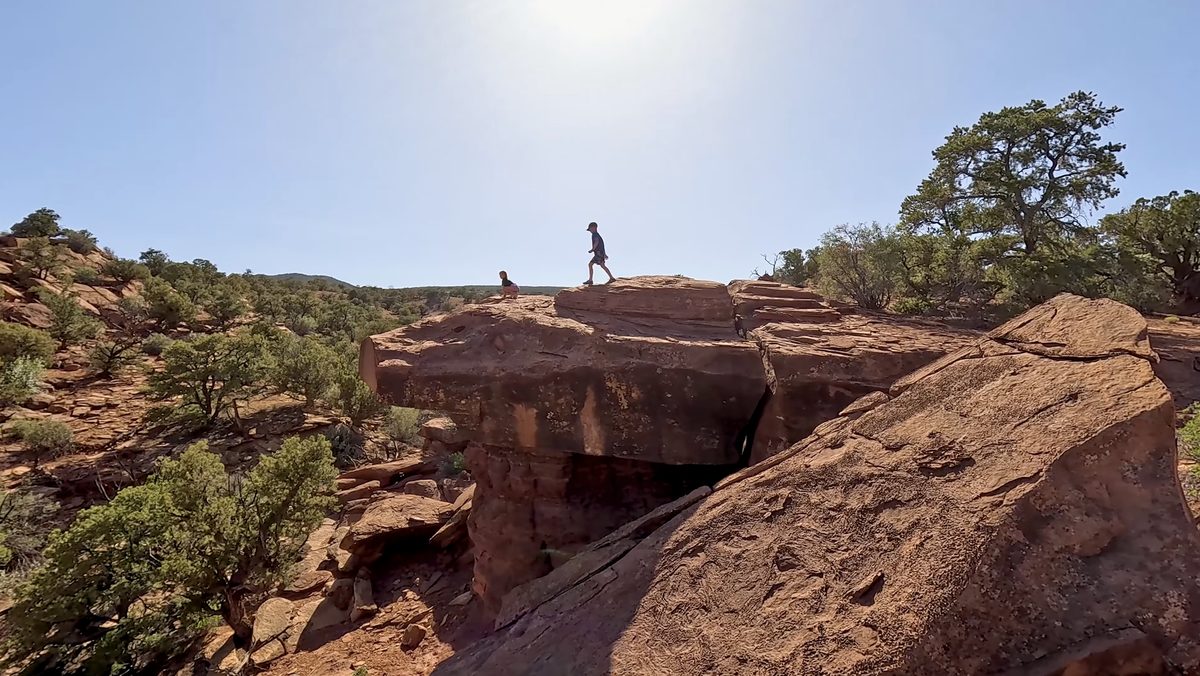
The scenic drive winds through the park past cliff formations with pull-offs for various trails and viewpoints. The canyon walls shift color and texture as you go and the views keep getting better. We pulled off to explore the old wagon trail area, which has great rocks for kids to scramble and jump off.
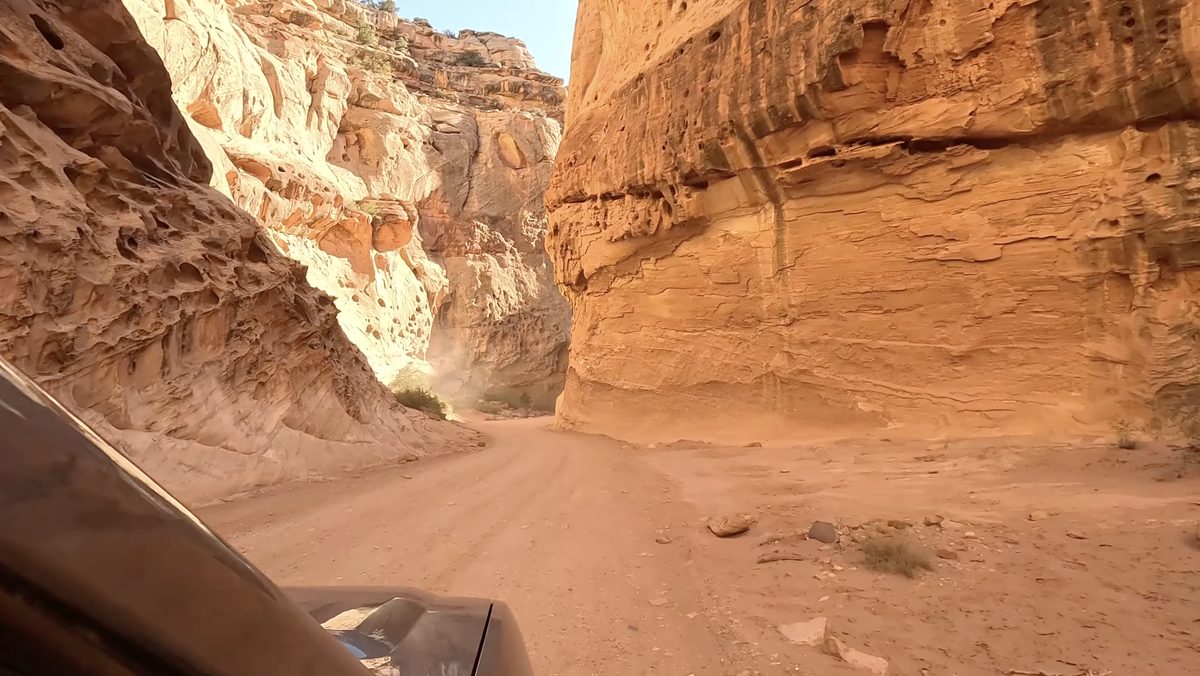
At the end of the paved road you reach Capitol Gorge, where the pavement ends and a dirt road continues into a narrow canyon between walls that tower above you on both sides. The natural reaction is to stop at the pavement. Don't. The dirt road is smooth enough for most vehicles and the canyon it takes you through is one of the most dramatic things we saw in the entire park. We drove it and then came back the next day to bike it, which was also excellent.
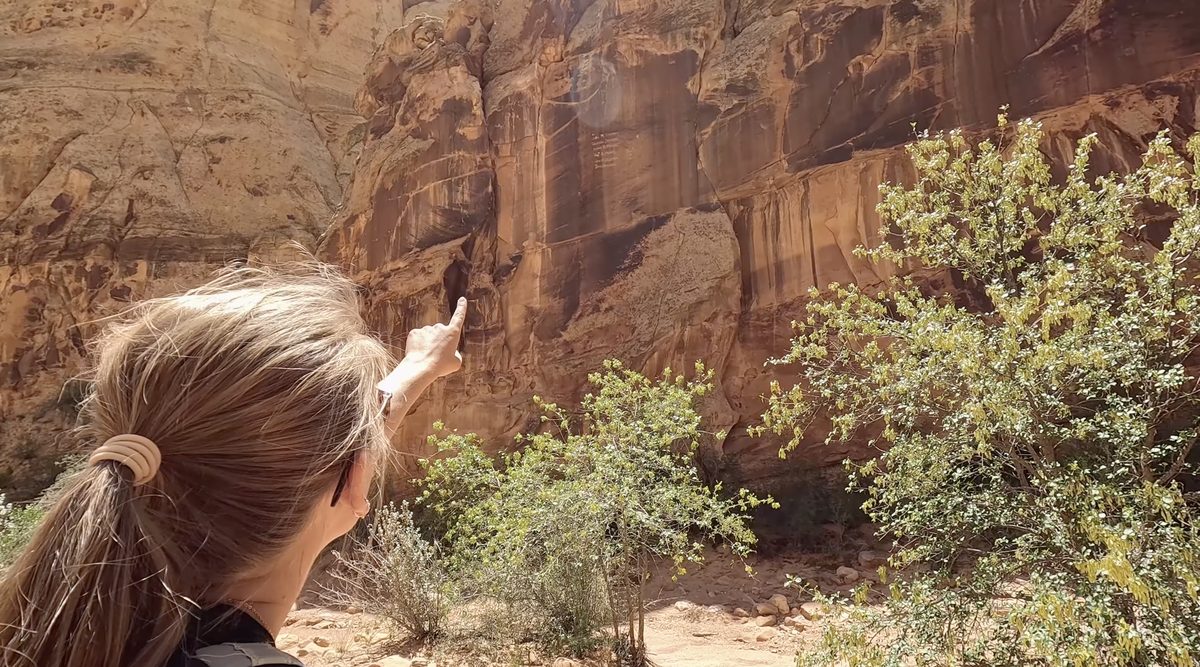
This one surprised us. The trail follows an old riverbed through a narrow canyon and is mostly flat, which makes it accessible for younger kids. About a mile in you reach the Pioneer Register, a section of canyon wall where travelers carved their names into the sandstone going all the way back to the 1880s. Real names, real dates, carved into the rock by people passing through over a hundred years ago. We found entries from 1888 and 1911.
Further along the trail you can scramble up to the Tanks, natural stone basins in the rock that collect rainwater. When we were there the tanks had water, tadpoles, and what one member of our group confidently identified as dinosaur footprints. We also spotted a snake actively eating a lizard nearby, which prompted an impromptu lesson on being the snake versus being the lizard in life. Not sure exactly what that correlates to, but it sounded good at the time.
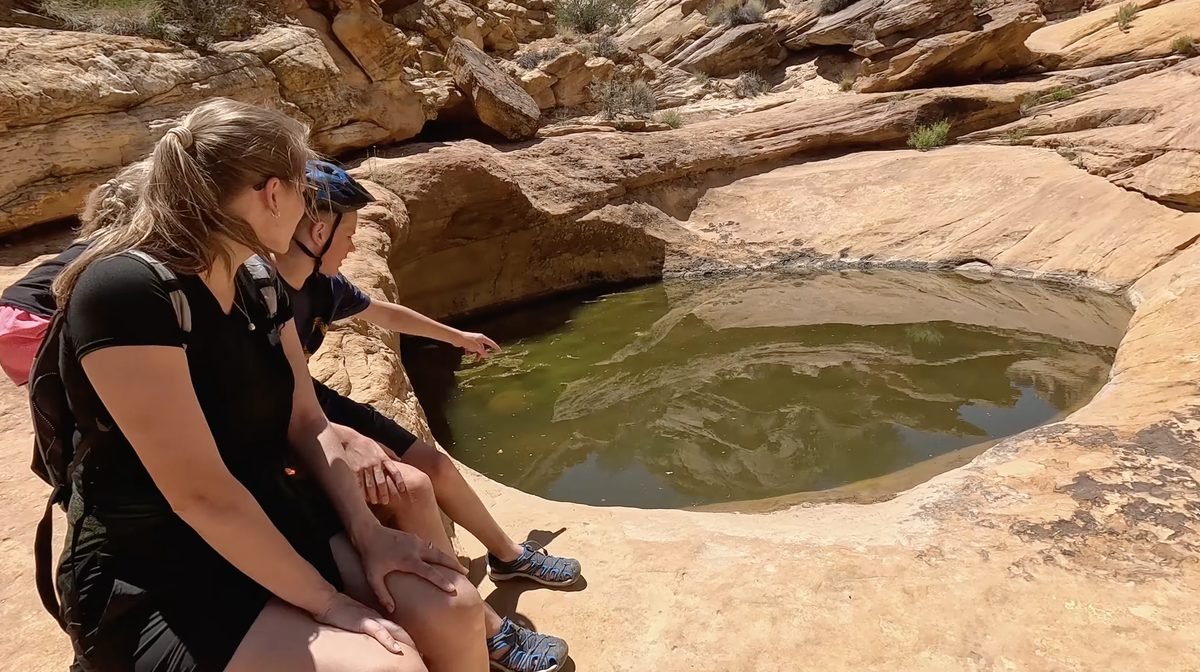
One of the kids was expecting military tanks, so he was disappointed, but everyone else had a great time. There's also a natural arch near the tanks that we almost missed. Worth looking for.
Important note: bring plenty of water. The canyon has limited shade and gets very hot in the middle of the day.
While half our group did Capitol Gorge, the other half headed into Grand Wash, a separate canyon trail off the scenic drive. The trail takes you through a narrowing slot with high walls on either side that eventually feels like a smaller version of the Zion Narrows.
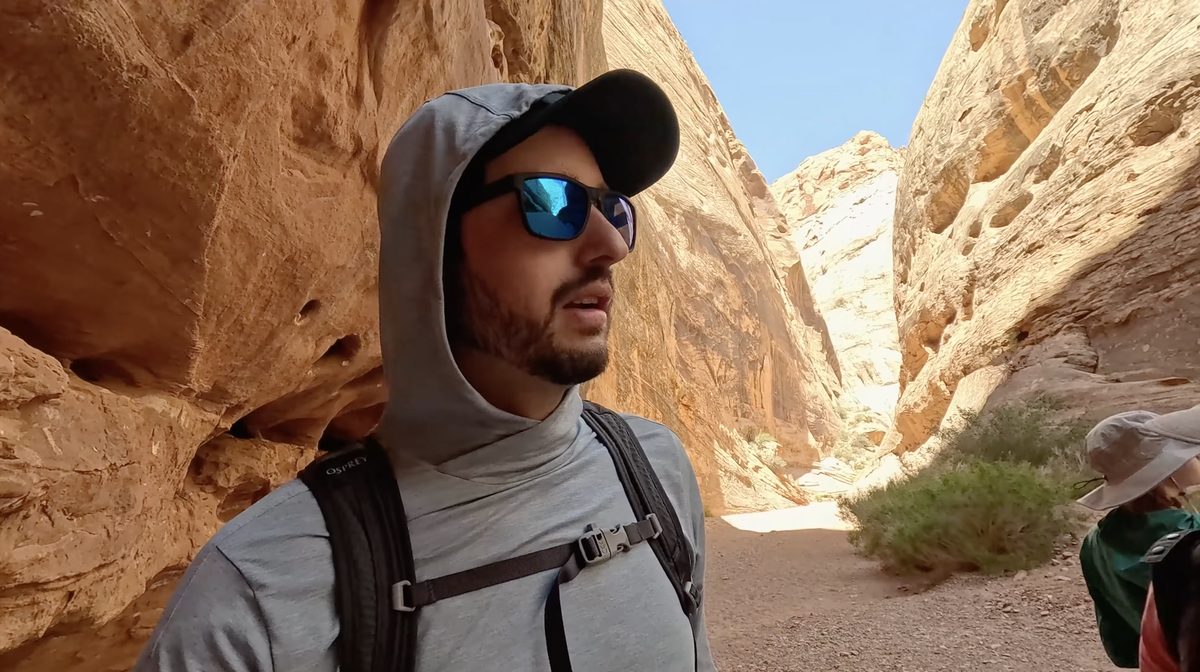
Along the way we discovered the Oyler Uranium Mine, which has one of the stranger historical footnotes we came across on the whole trip. In the early 1900s people actually believed uranium had health benefits. They wore uranium ore around their necks. They crushed it up and consumed it as a health tonic. Probably about as healthy as all the supplements you can get on Amazon these days… but I digress.
Total distance was about 2.5 miles and the group found it a great trail, though hot in the afternoon without much shade. Earlier in the day would be better.
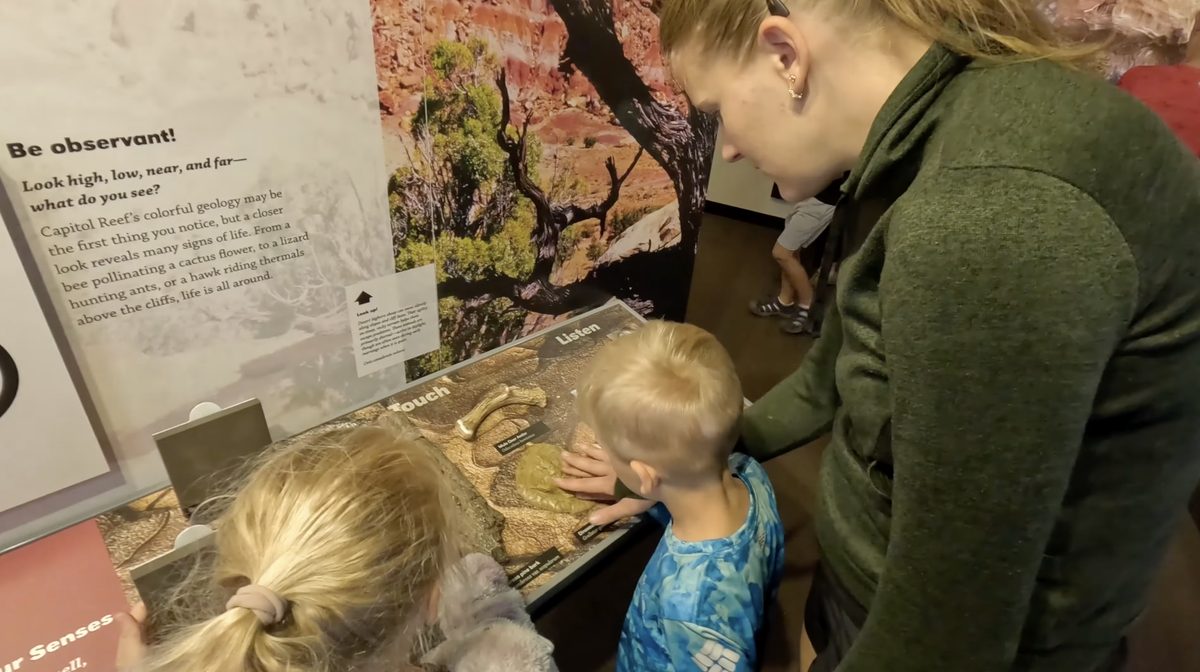
Smaller than most national park visitor centers but worth the stop. The geology exhibits answered a question we'd been asking since Moab: why do the different rock layers have such different colors? The short answer is different sandstone compositions. The striped canyon walls that look painted make more sense after seeing it explained. Kids can earn a Junior Ranger badge here too. If you want to do that, pick up the booklet on the way in so they can fill it out as you go.
Visit in the evening. The park empties out and the evening light is beautiful on the canyon walls.
The orchards are seasonal. Check what's being harvested before you go. Worth planning around if you can.
The Capitol Gorge dirt road is fine for most cars. There's a 4x4 branch that goes further, but the main canyon road is smooth dirt. Keep driving past the pavement.
Bring more water than you think you need. The canyon hikes have limited shade and it gets genuinely hot in the middle of the day.
Give yourself at least a full day. We spent an evening on day one and then the morning to early afternoon on day two. There was plenty to do and we didn’t even cover everything.
We went in with low expectations and came out having had one of our favorite experiences of the whole Utah trip. Less crowded than Zion, more varied than it looks from the outside, and with a historical layer that makes it feel completely different from the other parks. If you're doing the southern Utah loop with kids, don't blow through this one.
Doing the full southern Utah loop? Check out our guide to Zion National Park with Kids and more!