
Zion National Park is one of the most spectacular places we've ever visited. It's also one of the most logistically challenging national parks to navigate with kids, and we say that having visited nine different parks so far this year.
This post is the guide we wish we'd had before we went. We'll cover logistics, the best hikes for families, and other things worth doing while you're there. We've also done dedicated posts on the three main hikes below, so where it makes sense we'll point you there for the full details.
Before anything else, it helps to understand how the park is set up, because the geography heavily influences the logistics. The main attraction in the park is Zion Canyon, a dramatic narrow canyon with massive red rock walls on either side and the Virgin River running down the middle. One primary road runs along the canyon floor, with all the major trails and destinations branching off it.
There is a small touristy town right outside Zion Canyon called Springdale, but beyond that, the closest city is Hurricane about 40 minutes away.
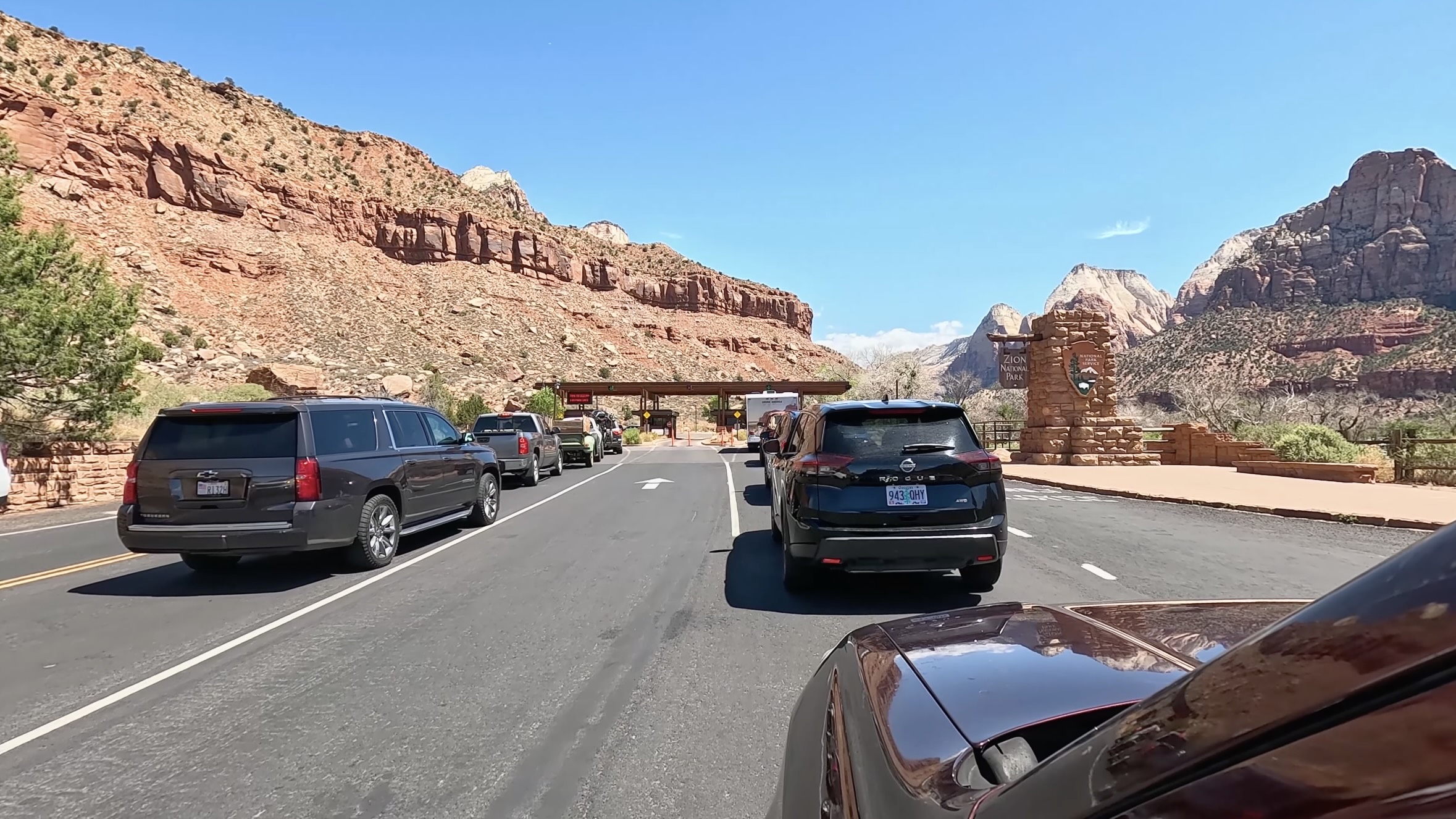
Here's the thing that catches most people off guard: from spring through fall, private vehicles are not allowed beyond the Canyon Junction shuttle stop (#3). This is where most family trips to Zion run into trouble, including ours.
There are two main parking areas inside the park: the visitor center and the museum. Combined they don't hold that many cars, and during peak season they are completely full by 7:30 a.m. We arrived around noon on our first day and both lots were packed. I ended up dropping the kids at the museum and driving back to Springdale to find a paid parking spot. It took a chunk out of our day.
Here's what actually works:
Arrive by 7:00 a.m. if you want visitor center parking. Any later and you're rolling the dice.
Come after 2:00 p.m. People start leaving in the early afternoon and spots open up. Shuttle lines are also shorter. If you're doing a shaded hike like Emerald Pools or a water hike like the Narrows, the afternoon is genuinely a fine time to start. Just keep in mind the shuttle does stop running around 8pm during the main season.
Park in Springdale and walk or shuttle in. There are paid parking lots throughout town. Look one up ahead of time and go straight there rather than wasting time circling the visitor center lots. Bring cash since cell reception is spotty and card readers don't always work.
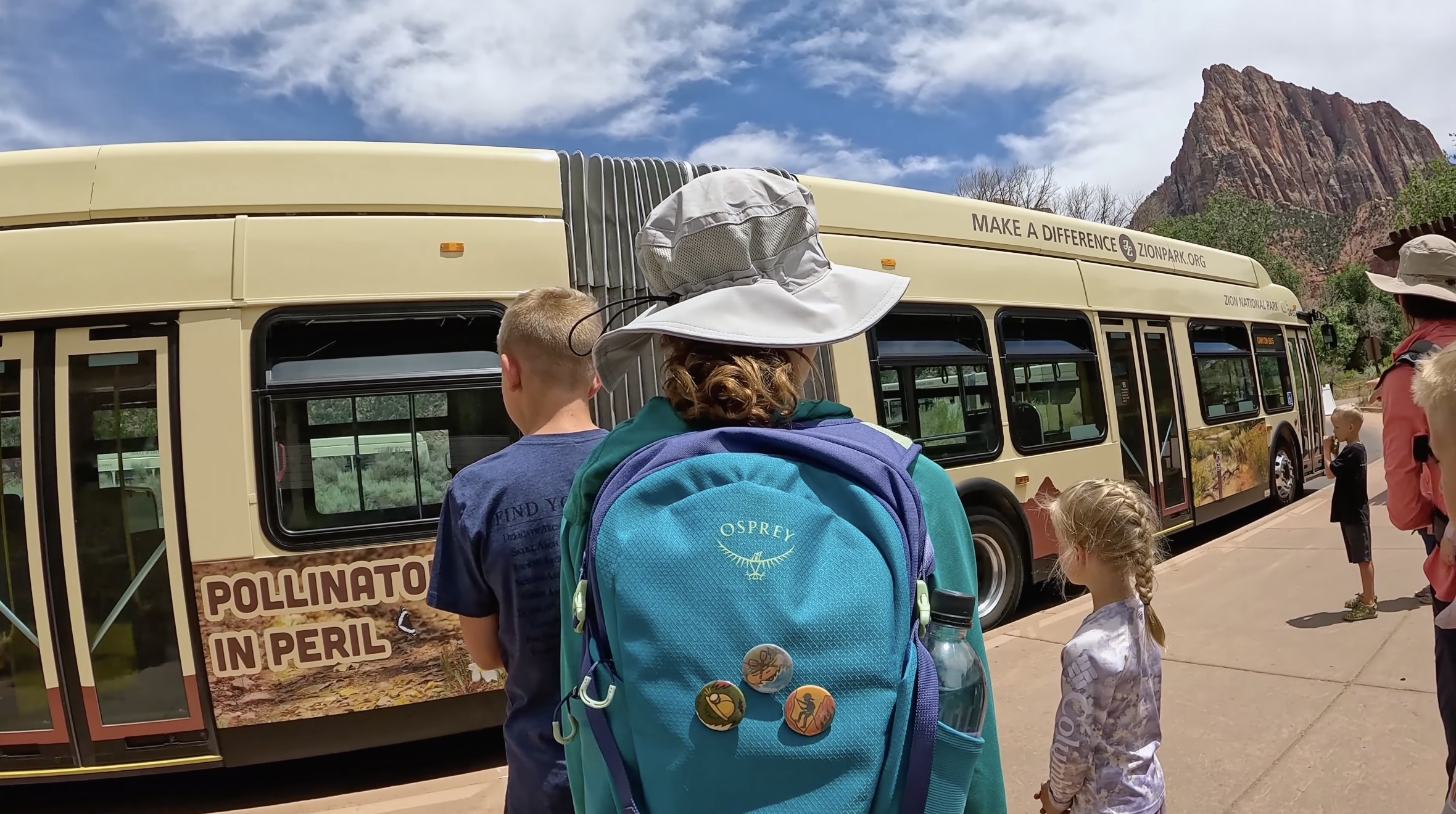
Once you're in the park, the free shuttle is your primary transportation. There are nine stops along the canyon route. A few things worth knowing:
Shuttles heading up the canyon do not pick up passengers at stops 2, 3, or 8. If you're standing at one of those stops expecting a ride up, it won't happen. You have to catch a shuttle going down the canyon first.
Shuttle frequency varies and lines can get long in the morning. During peak season, expect to wait and plan your day around it. Bring plenty of snacks for the kids and maybe some books or games.
The small town of Springdale sits right outside the south entrance to the park and has lodging options, but prices reflect the proximity. If you're looking for something more affordable, the towns of Hurricane and LaVerkin are about 40 minutes away and have grocery stores, a Walmart, and significantly cheaper accommodation options. We stayed at an AirBnB in Hurricane and drove in each day, which worked fine.
If you're visiting with kids on the younger end, start here. The Emerald Pools Trail winds up along the canyon wall to three natural pools at increasing elevations, with genuinely beautiful scenery along the way. Total round trip distance for all three pools is about 3 miles, and the trail runs mostly in shade during the afternoon.
The best thing about this hike is its flexibility. Each pool is a legitimate turnaround point, so you can calibrate the distance to your group. The lower pool is accessible for almost any age. The middle pool adds a stream with tadpoles and some wildlife. The upper pool requires the most effort but delivers the best payoff, with a natural bowl formation carved into the canyon wall and a great rock scrambling area for kids.
A note on water levels: we visited during a drought year and the pools were lower than we expected. Earlier in the season after snowmelt, or in a wetter year, the pools are apparently much more impressive. Still a great hike regardless.
Good for kids of most ages. No permit required. A solid first day hike while you're still figuring out the park logistics.
This is my favorite hike in Zion. Possibly one of my favorite hikes anywhere. The views from the summit are genuinely stunning and the chain section adds an adventure factor that most trails don't have.
That said, it comes with two significant caveats for families.
First, you need a permit. The upper section beyond Scout Lookout requires a permit obtained through a recreation.gov lottery. Apply for the advance lottery first, then try the day-before lottery as a backup. We applied in advance and didn't get it, then three of us applied the night before and one got enough for our group. It works, but it's not guaranteed.
Second, it is not suitable for young kids. The chain section requires genuine scrambling ability and comfort with significant exposure. Kids need to be able to do it completely independently since you can't easily assist a child who struggles while other hikers are passing in both directions. Our honest recommendation is 8 years old as a minimum, and only for kids who are already comfortable on exposed terrain.
Scout Lookout, the plateau below the chain section, is accessible without a permit and still delivers excellent views. If your kids aren't ready for the chains, that's a completely worthwhile destination on its own. Could be a good place to split up your group as more adventurous folks go all the way to the summit.
For everything you need to know about permits, timing, and what the hike is actually like, see our complete Angel's Landing guide.
The Narrows is an experience unlike any other hike we've done. You're walking through a slot canyon, with walls rising hundreds of feet on either side and water swirling around your ankles and knees. No permit required for the standard bottom-up route.
With kids, the main limiting factor is cold. Even on a warm day, the water in the shaded sections stays cold, and kids lose heat much faster than adults. Our younger kids were cold and done at about the three-quarter-mile mark. That's still a great experience, the canyon is beautiful even that close in, but manage expectations about distance with small kids.
Kids 6 and up can walk independently through most of it. For younger kids, plan to carry them through the deeper sections. The further in you go, the fewer people you encounter and the more spectacular the canyon becomes.
Rent the hiking poles from one of the shops outside the park entrance. They're about $8 each and genuinely useful on the uneven river rock. The neoprene water boots are optional, we just brought watershoes and they were fine.
For a full breakdown including gear, shuttle timing, and what it looks like with a group of kids, see our complete Narrows guide.
Most visitors to Zion never leave the main canyon, which means they are missing some of the best areas in the park. Zion Wilderness, including the West Rim, is a completely different experience: 8,000 feet of elevation, ponderosa pines, scrub oak, and almost no one around.
We did an overnight backpacking trip on the West Rim Trail and it was one of the highlights of the entire Utah trip. The contrast from the packed canyon floor to the quiet wilderness was remarkable. If you have any interest in backpacking, this is absolutely worth planning for.
The Kolob Canyons section of the park is another area worth exploring if you have time, though we didn't make it there on this trip.
A few practical notes on the wilderness areas: backcountry permits are required for overnight trips and must be obtained through recreation.gov. You'll also need to stop at the Zion backcountry office in person before your hike to confirm your permit and get a vehicle pass for the trailhead. While you're there, ask specifically about water source conditions at your planned campsite. Sawmill Spring near campsite nine was completely dry when we visited, and we would have been in serious trouble if we hadn't known that before we left the car.
Available through the park's guided program and good for kids ages 7 and up. The ladies on our crew gave it a try and had a genuinely great time. A nice way to see the canyon from a different angle and a welcome change of pace from hiking. Book in advance as spots fill up during peak season.
Worth an hour, especially with younger kids. The human history museum has interesting exhibits and the ranger-led programs for kids are solid. There's a nature center with animal exhibits that kept our younger ones engaged while the older kids were recovering from the previous day's hikes. Just keep in mind that it can be challenging to arrive at these things on time given the shuttle fiasco. Budget plenty of buffer time.
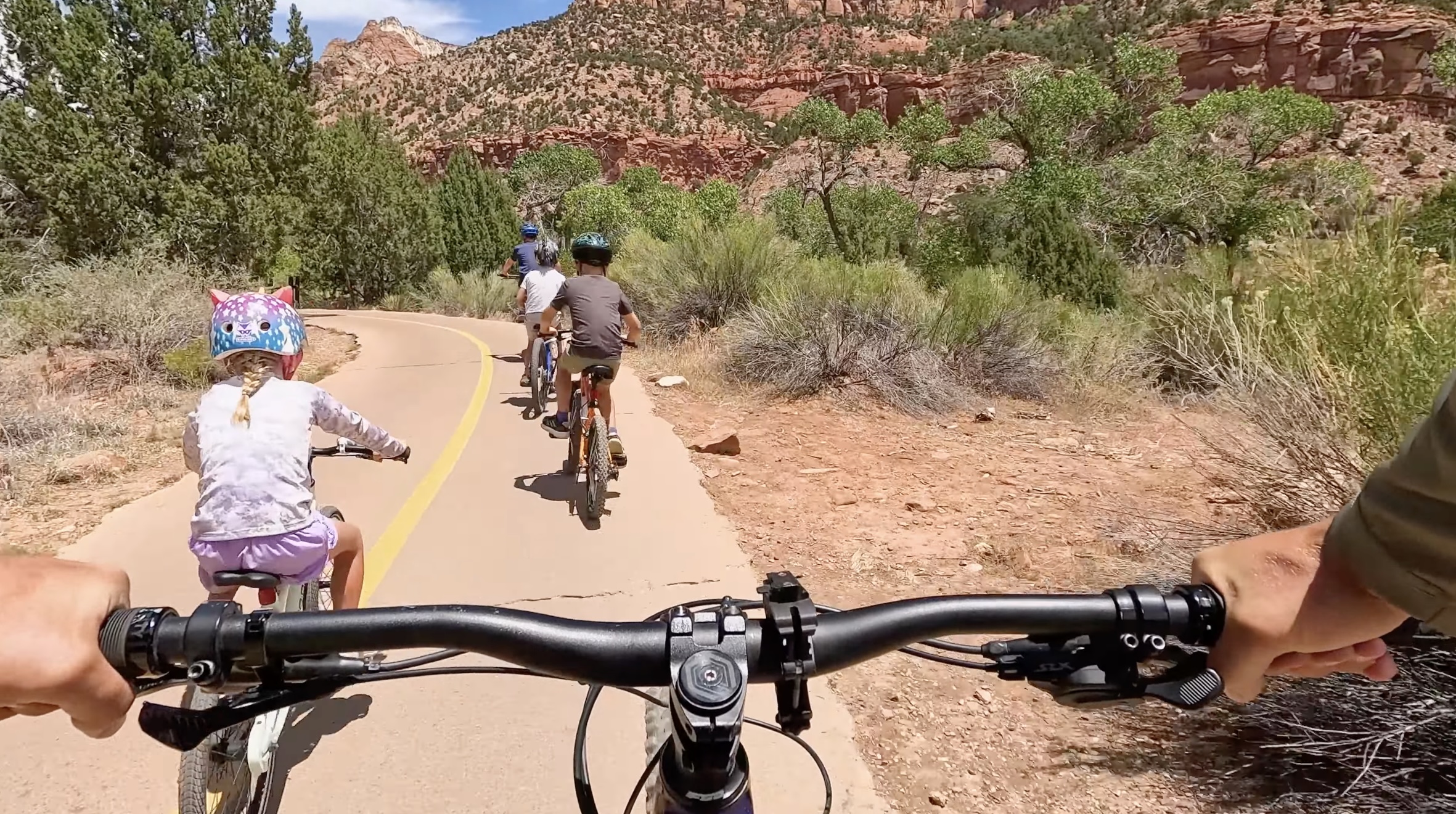
We tried this. We don't recommend it with kids.
There is one official bike path in Zion called the Pa'rus Trail, which runs from near the visitor center to Canyon Junction at shuttle stop 3. That section is lovely and totally doable with kids. The problem is that beyond Canyon Junction, you're on a narrow two-lane road shared with park shuttles. Not a comfortable situation with children. Some of the bus drivers are genuine A-holes.
We thought we'd solved it by riding the Pa'rus Trail to Canyon Junction and locking up the bikes there to catch the shuttle, only to discover that shuttles going up the canyon don't stop at Canyon Junction (#3). We had to ride back to the visitor center, get on a different bus, and come back up. It cost us well over an hour.
For adults without kids, biking the canyon road is probably fine. With kids, it's not worth the hassle. Just take the shuttle.
Zion is one of the most beautiful places we've ever been and we'd go back without hesitation. But of the five parks we hit in southern Utah, it had by far the steepest learning curve. The parking situation, the shuttle system, the permit requirements, and the sheer volume of people during peak season all add friction that other parks don't have.
The good news is that once you understand how it works, it becomes much more manageable. Arrive early or late, have a parking plan before you get there, build extra time into anything permit-dependent, and consider an afternoon start for shaded or water hikes.
Do all that and you'll have an incredible trip.
Planning your Zion visit? See our complete guides for each hike: