
The Grand Canyon is one of those epic natural destinations that you absolutely must visit at least once in your lifetime. But if you're taking your family there, what can you actually do besides staring off into the distance for a few minutes before hitting the gift shop and leaving? Here's what we learned from our recent trip with kids.
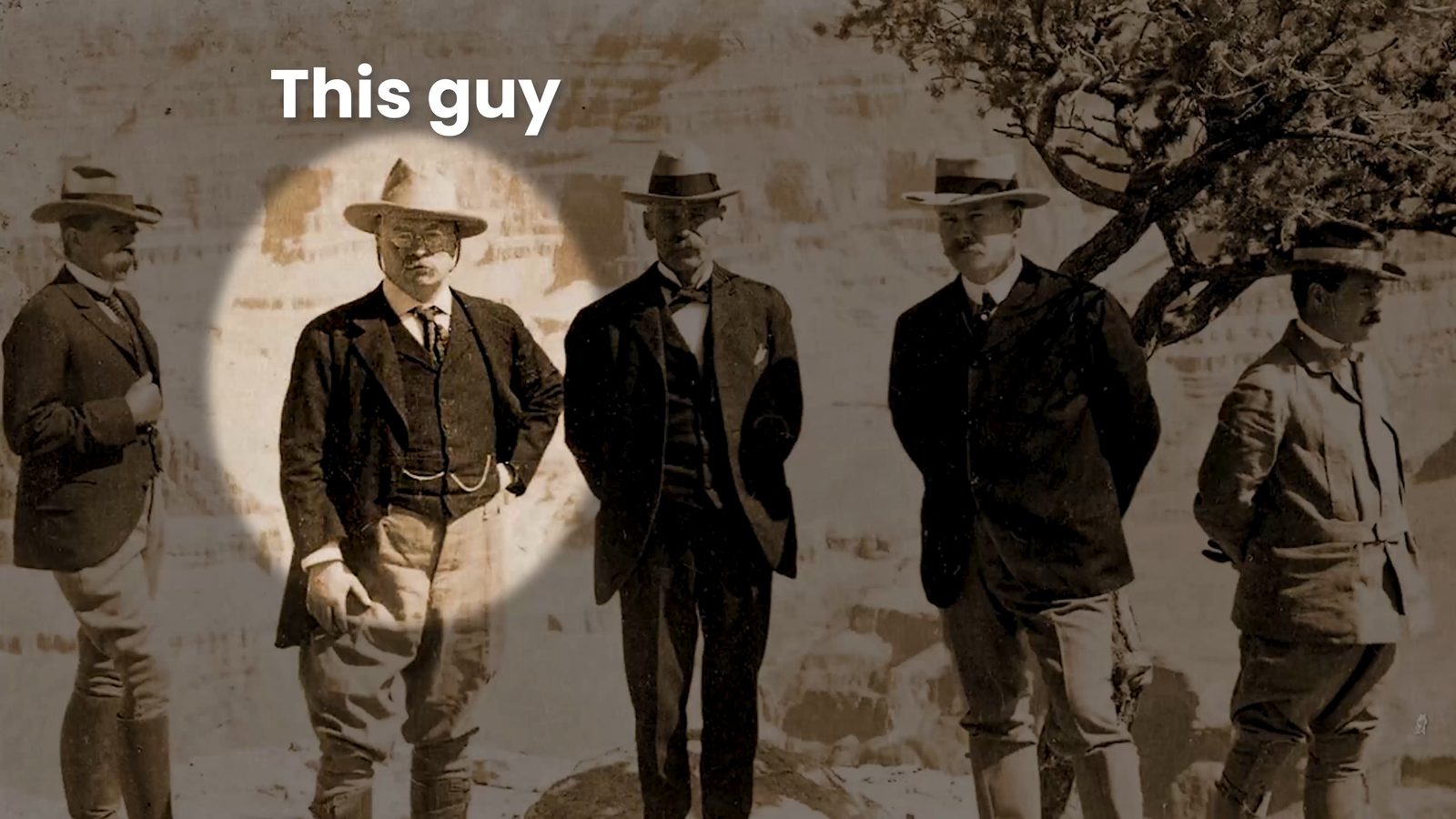
The Grand Canyon is a massive gorge in northern Arizona, over 277 miles long and more than a mile deep. It became a national park in 1919, in large part thanks to Theodore Roosevelt, who visited in 1903 and was reportedly so struck by it that he told the crowd gathered to greet him to leave it exactly as it is. Good advice. Check out our podcast on the Rise of Theodore Roosevelt for more about his fascinating life.
Most visitors go to the South Rim, which is where we went and where the majority of the trails, overlooks, and visitor facilities are. The North Rim exists but is more remote, has a shorter season, and is a much longer drive from most major cities.
Getting in: The park charges an entry fee. The best deal by far is the America the Beautiful Pass, which gets you into every national park, monument, and federal recreation area in the country for $80 (per family/vehicle) and is valid for a full year. If you're hitting more than one or two parks in a year, it pays for itself fast.
The overlooks are the obvious starting point. Mather Point, right near the visitor center, is where most people get their first look into the canyon, and the reaction is pretty universal: it does not look real. The scale is genuinely hard to process in person, let alone in photos.
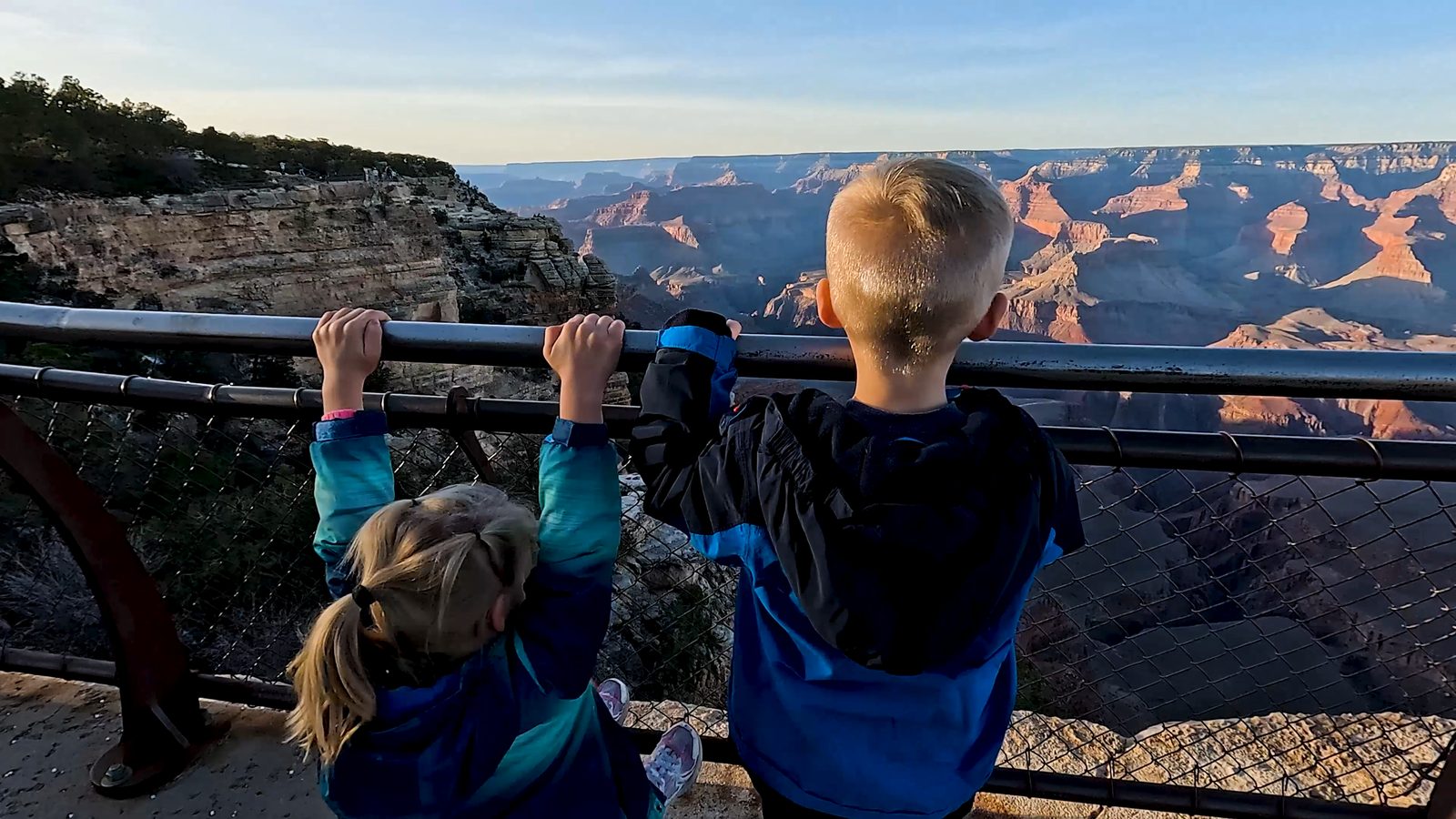
A free shuttle runs along the South Rim and makes it easy to hop between viewpoints without dealing with parking. Worth using. But after about 10 minutes of staring into the distance at each point, kids are going to want to do something else. Which brings us to the main event: hiking.
If you make the trip to the Grand Canyon and don't hike into it, you're leaving the best part on the table. The view from the rim is impressive. The view from inside the canyon is something else entirely. The topography changes dramatically with elevation, from high desert scrub and juniper at the top to rugged, textured canyon walls and brown desert at the bottom. It feels like a completely different place. Instead of just seeing the canyon, you can actually experience it.

There are several trails to choose from, but we hiked the South Kaibab Trail, which is one of the most popular and gives you some of the best views on the way down.
The full trail runs about 6.5 miles to the Colorado River at the bottom, with roughly 4,800 feet of elevation change. The trailhead sits at about 7,200 feet. It is not a flat walk. That said, you do not have to go all the way to the bottom. There are stopping points at Cedar Ridge (about 1.5 miles down) and Skeleton Point (about 3 miles) that make for solid turnaround spots depending on your group. Some people camp overnight at the bottom, but that is outside the scope of this post. If you would like to try backpacking with your kids in general, check out this post for helpful tips.

Despite all of the signs that say you should not try, it is possible to go to the Colorado River and back in one day. I did it with a friend on this trip and we met up with our wives and kids at Cedar Ridge on our way back out.

BUT, some important things to keep in mind. Folks need to be in really good shape and I wouldn't try with kids under the age of 14+. The distance isn't bad, but the elevation change is killer. If it is hot, you are going to go through a LOT of water and quite a few people have to be rescued each year. I workout / run a lot, but it was still hard to walk the next day.
Our start time was 7:00am and we made it down to the Colorado River in about an hour and 40 minutes moving at a decent pace with some jogging. The climb out took significantly longer. Total time for the full round trip was just over 6 hours. Getting down is the easy part. Getting out is where people underestimate the trail.

A few practical notes: go early, especially in warmer months. In summer, rangers actively discourage hiking to the bottom and back in a single day due to heat and dehydration risk. We went in February, which was ideal. Bring more water than you think you need regardless of the season.
As mentioned, we split the group on this one. Two of us went for the bottom while the moms started later with the kids and hiked down to Cedar Ridge, about 1.5 miles in, to wait for us on the way back up.
Cedar Ridge was the right call for the kids. It's a manageable distance, there's a good lookout, and it gives them a real taste of what it feels like to be down inside the canyon rather than just looking at it from above. Our youngest was six, and the group handled it fine at that distance. Just budget extra time on the way back up and don't underestimate how much slower the return trip is with tired little legs.

Pro tip that saved us on the climb out: gummy bears. Dole them out at intervals as bribes for forward progress and a good attitude. Works remarkably well. We're not above it and you shouldn't be either.
The visitor center and museum are worth a stop, especially if you want some context before heading out on the trails. Food and souvenirs inside the park are expensive, so plan accordingly and bring snacks.
Wildlife was one of the bigger surprises for us. We spotted elk, mountain goats, and squirrels that have clearly been eating well at the expense of tourists. Keep your eyes open, especially early in the morning.

Buy the America the Beautiful Pass if you don't already have one. $80 for every national park in the country for a year is a genuinely good deal (per family/vehicle).
Go early. The trails are less crowded, the temperature is lower, and watching the sunrise from inside the canyon is worth setting an alarm for.
Plan your hike in advance and know your turnaround spot. Bright Angel Trail has water stations, which is very helpful in summer. However South Kaibab trail has better views along the way.
Bring more water than you think you need. The dry air and elevation will get you faster than you expect.
Use the free shuttle. Parking along the rim is limited and the shuttle stops at all the major overlooks. No reason to fight for spots.
Food is expensive inside the park. Pack snacks. Pack water. Pack sports drinks.
The Grand Canyon is one of those rare places that genuinely lives up to the hype, but only if you actually descend into it. Standing at the rim is fine. Hiking down into it with your kids, watching the canyon walls close in around you, touching the Colorado River at the bottom, and then grinding your way back out is the kind of thing everyone will remember.

Get out there and do it.